How To Improve First Aid Visibility in The Workplace
Most workplaces have a first aid kit. Fewer have first aid visibility. A kit gathering dust in a locked cupboard is useless for a colleague who has just cut their hand. When they need a first aid kit, it must be quick and easy to find.
Having a first aid kit is actually the easy part. Making the kit visible and easy to access in an emergency takes more work.
Safety culture comes first
Products alone don’t create first aid visibility. A wall-mounted sign and a stocked kit mean nothing if management sees first aid as a box-ticking exercise rather than a standing commitment.
Culture starts with resourcing. Management needs to put people, time and budget behind first aid. That means:
- A suitably stocked first aid kit in all relevant locations. According to this article, construction sites and factories need a small or medium-sized kit for fewer than 25 employees, and one large kit per 25 employees. Offices and retail environments only require a large first aid kit per 100 employees.
- Appointed people to take charge of first aid arrangements. Employers need an appointed first aider up to five employees. After that, you’ll need a first aider for every 50 members of staff.
- Information for employees about first aid arrangements.
Accessibility
None of the above matters if the kit itself is hard to reach. A kit behind a locked cupboard or buried under stock defeats the purpose entirely. In an emergency, people need to spot it and reach it within seconds.
Location matters as much as accessibility. A kit by the front door may seem useful and tidy, but it may not be if most injuries happen on the workshop floor or next to a machine. Next to the front door may be ideal if it’s a main entrance or in a reception area. However, match kit placement to where accidents are likely to happen, not where it’s convenient to store it.
The Products That Make First Aid Visible
Three products improve first aid visibility. People often treat them as interchangeable, but they’re not. Together, they maximise visibility across a site and ensure first aid equipment is always seen.
First aid signage
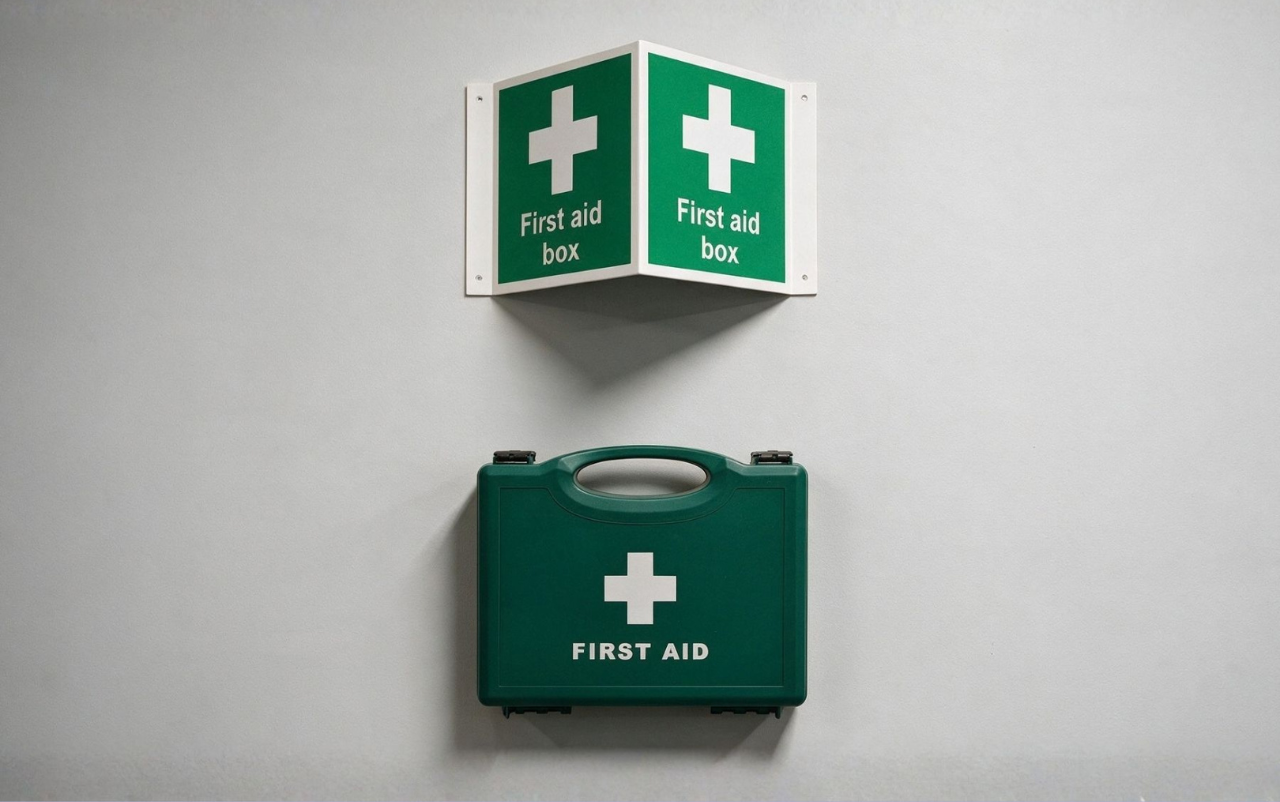
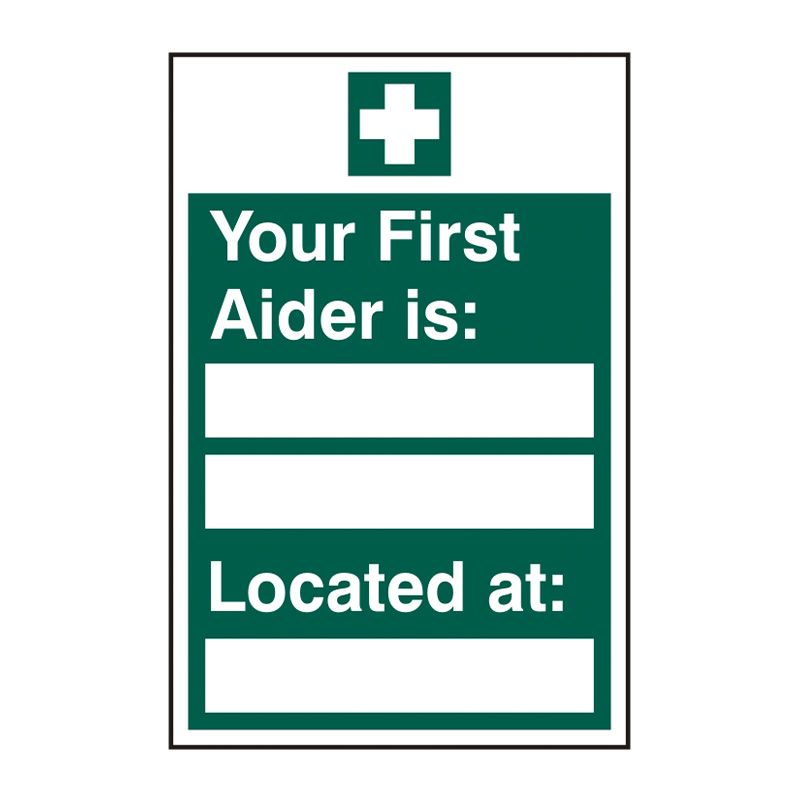
First aid signs are standard workplace essentials. They are typically used to identify the location of first aid equipment and who the designated first aiders are. Because of their stand-out green design, these signs make first aid equipment easy to spot in a busy workplace.
Place first aid signage next to the station and around the building to identify the nearest equipment.
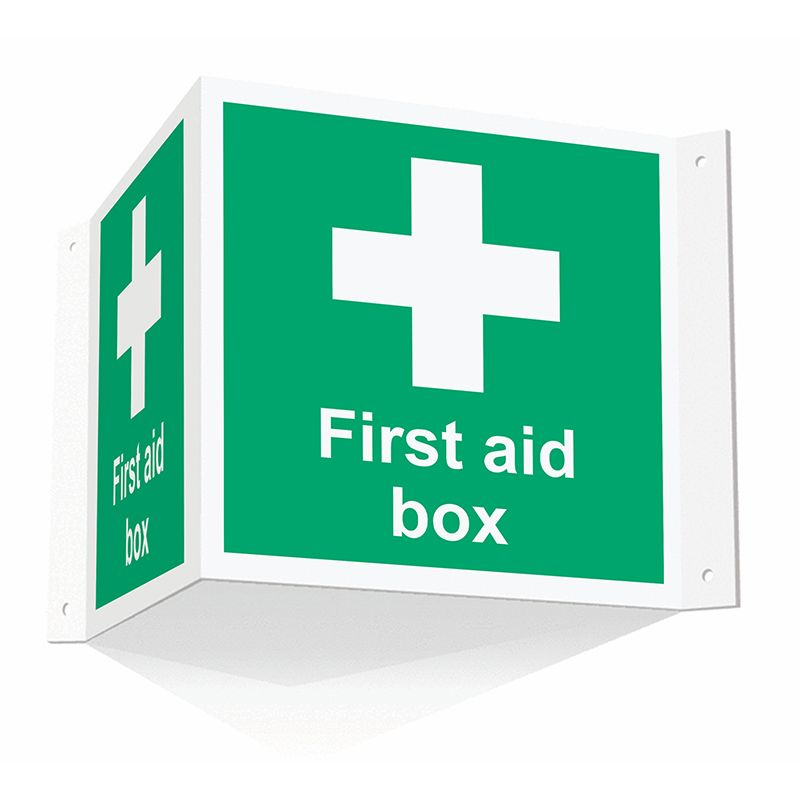
Projection signs
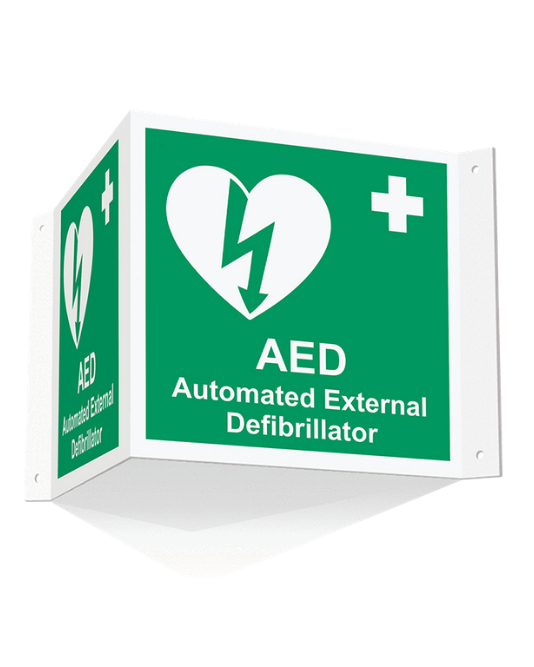
These signs are used where a flat, wall-mounted sign has a blind spot. Narrow corridors, stairwells and doorways are typical examples. A standard sign is only visible head-on, so anyone approaching from the side may not see it clearly.
Projection signs solve this by angling off the wall, usually at 45 or 90 degrees, rather than sitting flush against it. For first aid visibility, this matters because the sign stays visible from multiple angles, reducing hesitation when someone needs help quickly.
They’re not an upgrade or alternative to standard, flat first aid signage. Use them specifically where there’s a blind spot, a corner, a stairwell, or a kit that isn’t in a straight sightline from the main approach.
Safety posters
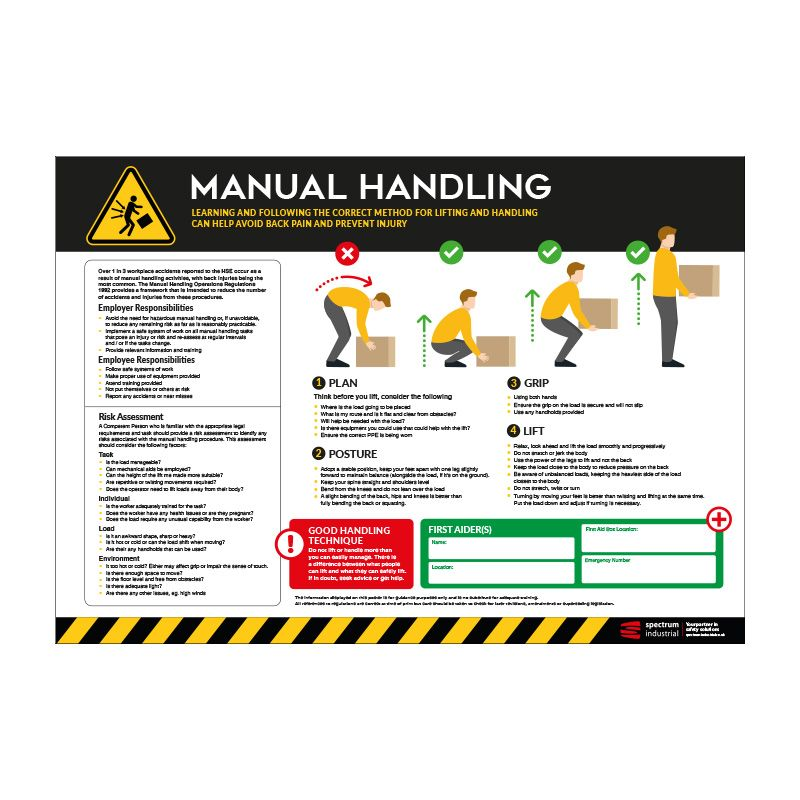
Safety posters aren’t there to point at a kit. Their job is to reinforce first aid awareness every day, not just in an emergency. The type of poster that is used can and should vary depending on the workplace and where it is installed. Safety posters are useful because they offer clear guidance and first aid information directly on the wall. Some options for safety posters include:
- First aid for burns, eyes, and construction sites
- Guidance on slips, trips, and falls
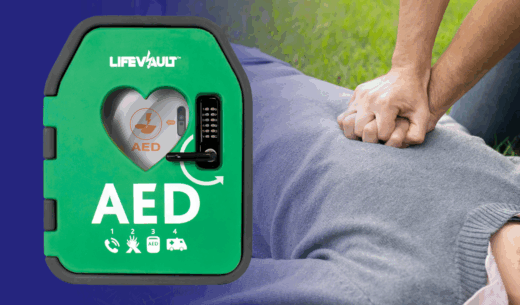
- AED guidance
- Safe manual handling
- Workplace first aid
These all offer vital information and should be placed in relevant areas. For example, place an AED safety poster next to a defibrillator, and a poster on safe manual handling next to loading bays, racking, and storage areas.
Safety posters do not replace real-time instruction and training. Safety posters matter because they reinforce messages and keep them front of mind.
First aid visibility results from culture, accessibility, and the right combination of products working together. Start with an audit. Walk the site and check three things: are kits stocked and unobstructed, are they located where accidents actually happen, and can staff spot the nearest one within seconds from wherever they’re standing. That last check will quickly tell you whether you need standard signage, projection signs for blind spots, or posters to keep first aid top of mind day to day.
Once a safety-first culture and proper processes are in place, first aid visibility becomes much simpler and can reduce the time between an incident and response.
Content created in partnership with Spectrum Industrial.