PFAS-Free Workwear: A Change You Won’t See, But One That Matters
When selecting high visibility workwear, protection and performance are understandably the first priorities. Garments must keep workers safe, comfortable and protected from the conditions they face, often over long periods and in demanding environments.
But increasingly, organisations are looking beyond how their workwear performs to consider how it is manufactured, the materials it contains and its wider environmental impact.
One area attracting particular attention is the use of PFAS, often referred to as ‘forever chemicals’, in water-repellent fabric treatments.
In February 2026, Leo Workwear completed its transition away from PFAS-based durable water repellent (DWR) finishes across all relevant garments. It represents another significant step towards more responsible high visibility workwear, without losing sight of the protection and durability that remain essential.
What Are PFAS and Why Do They Matter?
PFAS (per- and polyfluoroalkyl substances) are a group of synthetic chemicals historically used across many industries for their resistance to water, oil and staining.
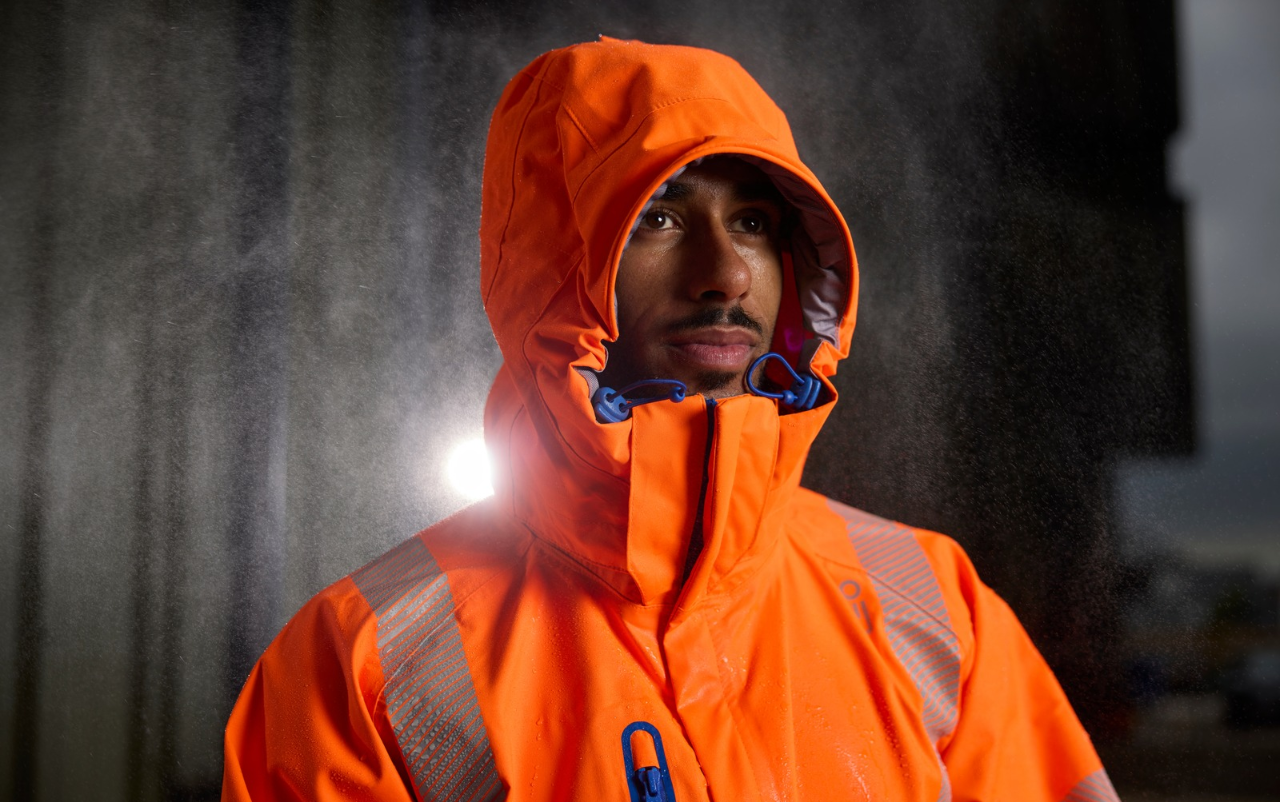
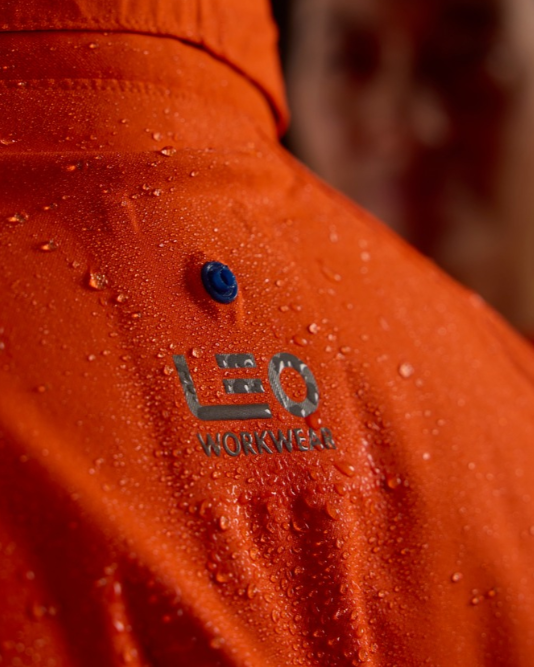
In protective clothing, they have commonly been used in DWR finishes. These treatments help water bead on the outer surface of a garment rather than soaking into the fabric, contributing to wearer comfort and weather protection.
The challenge is their environmental persistence. Many PFAS substances break down extremely slowly, potentially accumulating in soil, waterways and the wider environment. Concerns surrounding their long-term environmental and health impacts have led to increasing scrutiny of their use.
For manufacturers of protective clothing, the challenge is therefore clear: how can these substances be removed without compromising the performance that workers depend upon?
Removing PFAS Without Compromising Performance
For Leo Workwear, eliminating PFAS-based DWR finishes was not simply a case of switching to an alternative treatment.
The business began investigating PFAS-free solutions in 2023, followed by extensive wearer trials during 2024 to ensure the alternatives could meet its established performance expectations.
Feedback from wearers testing the new finishes revealed no noticeable difference in performance compared with the previous PFAS-based treatments.
Following these successful trials, Leo began transitioning its range in late 2024, completing the process in February 2026.
All relevant garments are now manufactured using PFAS-free DWR finishes, including applicable outerwear, mid-layers and trousers. No new manufacturing orders are placed using PFAS-based DWR treatments.
Importantly, this is supported by ongoing quality assurance, with periodic fabric testing in accordance with EN 17681 to check for the presence of PFAS.
Protection Across the Leo Range
The importance of this transition becomes particularly clear when considering the different levels of weather protection required by workers.
As explored in Leo’s From Drizzle to Deluge approach to foul weather clothing, the right garment depends on the conditions, the task and the wearer.
For lighter, changeable weather, the Buckland Softshell (SJ01) provides a flexible, comfortable solution for active workers who need protection against occasional showers.
Where more sustained rain is expected, dedicated foul weather garments such as the Tawstock Anorak (A01) and Chivenor Bomber Jacket (J01) offer alternative levels of protection, supported by garments such as the Appledore Overtrouser (L01).
For more demanding conditions, the range extends to options such as the Clovelly Anorak (A04) and Marisco Anorak (A20), alongside women’s garments including the Rosemoor Jacket (JL04) and Hannaford Overtrouser (LL02).
These garments have different specifications, constructions and applications, but the approach to responsible manufacturing remains consistent.
Where a DWR finish is required, Leo has moved away from PFAS-based treatments.
This consistency is particularly valuable to organisations purchasing workwear across multiple roles, departments and working environments. Rather than having to identify individual garments within a specialist environmental collection, buyers can concentrate on selecting the appropriate protection, fit and technical performance for each wearer.
Building on EcoViz Recycled Fibres
Removing PFAS is not the beginning of Leo’s sustainability journey. It builds upon several years of investment in reducing the environmental impact of high visibility clothing.
In 2019, Leo introduced its EcoViz® range, using recycled polyester as an alternative to conventional virgin polyester.
What began with a limited collection has developed into a range-wide commitment, with Leo completing its transition to EcoViz recycled polyester and other more responsibly sourced materials in 2024.
The business has also invested in lifecycle assessments to better understand and communicate the environmental impacts of its garments, helping customers make purchasing decisions supported by evidence rather than broad sustainability claims.
The removal of PFAS-based finishes adds another important consideration to this work.
After all, using recycled fibres addresses one aspect of a garment’s environmental footprint. Considering the chemicals used in its manufacture addresses another.
Neither should be viewed in isolation.
Designed for Durability
Of course, the environmental credentials of a garment mean little if it cannot withstand the demands of everyday working life.
Durability is therefore a fundamental part of responsible workwear design.
From fabric selection and garment construction to reinforced areas and hard-wearing components, Leo continues to design clothing that can withstand demanding working environments.
A garment that performs reliably over an extended service life can help reduce the frequency of replacement, the consumption of new materials and the waste associated with prematurely discarded clothing.
This is particularly important in high visibility PPE, where products must deliver consistent safety performance throughout their usable life.
The aim is not simply to produce garments using more responsible materials and treatments, but to ensure that those garments are built to perform and last.
Greater Confidence in Every Choice
For those responsible for specifying and purchasing PPE, there are already numerous considerations: safety standards, weather protection, wearer comfort, fit, durability and cost.
Environmental responsibility increasingly sits alongside these established requirements.
Leo Workwear’s approach is to make responsible manufacturing part of its standard product development, rather than leaving customers to navigate a separate selection of environmentally focused alternatives.
With EcoViz recycled fibres, PFAS-free DWR finishes across applicable garments, an emphasis on durability and increasing transparency through lifecycle assessment, each development reinforces the others.
Through Lyreco, organisations can explore Leo’s extensive range of high visibility clothing with the reassurance that these improvements are embedded in the products themselves.
The right garment will always depend on the job, the conditions and the person wearing it.
But making the right choice for protection should not mean having to compromise on environmental responsibility.
Content created in partnership with Leo Workwear.