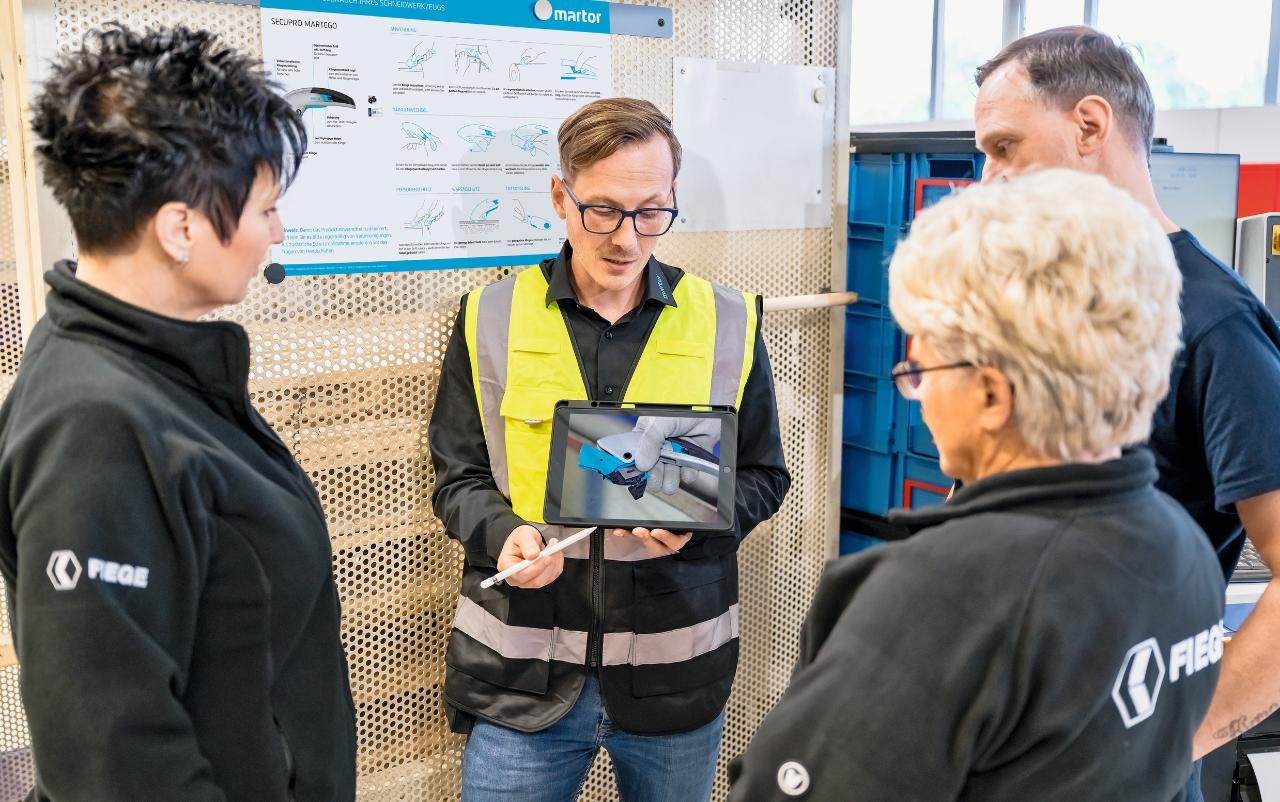
Toolbox Talks and Knife Safety Training: How to Build a Safe Cutting Culture
Safety knives only reduce cut injuries when they’re used properly. This guide covers how toolbox talks and regular training help build safer cutting habits.
Giving your team the right safety knife is an important first step, but it’s only the first one. Spend a day on the warehouse floor and you’ll often see why: a blade extended further than needed, a cut made towards the body, or someone using whichever knife is closest rather than the right one for the job.
In most cases the knife isn’t the issue. The way it’s used is. Choosing equipment is a one-off decision, but making sure people use it correctly every shift needs ongoing training, and that training has to stick. A single induction video in someone’s first week is rarely enough. This guide covers what that training should include, and the how-to videos, safety posters and training support MARTOR offers to help.
Why training matters more than the knife
Even the safest knife on the market is only as safe as the person holding it. That’s why good training goes further than showing someone how a knife works. It explains why a particular technique is safer, and what can happen when it’s ignored. The Health and Safety Executive (HSE) says training on knives should cover their general use and care, cutting away from the body, the dangers of blunt knives and typical accidents [1].
Toolbox talks help keep that knowledge fresh. Because they’re short, regular and informal, they give people a natural moment to ask questions or mention a concern, often before it has the chance to turn into an injury.
What to cover in knife safety training
The most effective training and toolbox talks on cutting safety tend to cover the same core areas:
- The risks: How cut injuries typically happen, including blunt blades and cutting towards the body [1].
- How each knife work: Using the knives your team actually has, show how features such as automatic blade retraction or a concealed blade work in practice.
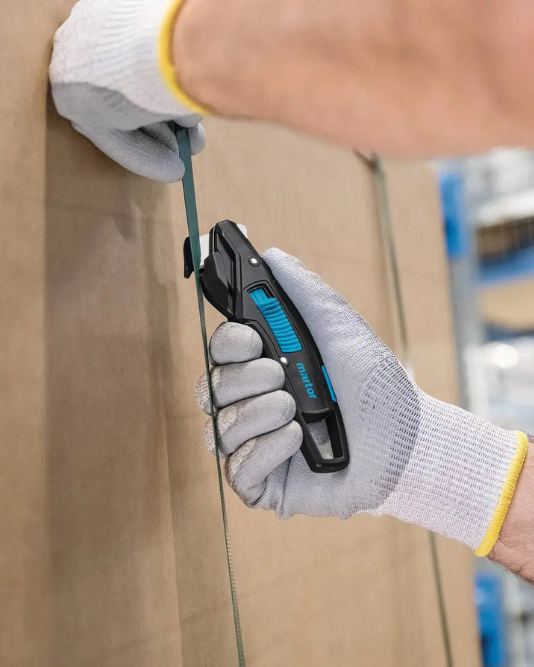
- Safe cutting technique: Cover grip, cutting away from the body and using a suitable surface to cut on.
- Changing blades: Agree how often blades should be changed, then walk through how to change and dispose of them safely, one step at a time [1].
- Near misses: Encourage people to report near misses without fear of blame, so problems can be fixed before anyone is hurt.
Choosing knives that are easy to train on
Training is much easier when the safety features are simple to see and explain. MARTOR safety knives, available through Lyreco, are designed with this in mind. On a SECUNORM knife, the blade retracts automatically, and on a SECUMAX the blade is concealed, so there’s no exposed point. Either one can be demonstrated and understood in a five-minute talk.
Standardising on one range helps too. When every team uses the same knives, there’s less to teach and less confusion about which knife suits which task.
Training and support included as part of the service
You also don’t need to build a training programme from scratch. When you choose MARTOR, support comes as part of the service. All customers using MARTOR knives have access to:
- Product and how-to videos: Short videos showing how each knife works, how to cut safely and how to change a blade, ready to use in a toolbox talk or share with new starters.
- Safety posters: Clear visual reminders of safe cutting technique to put up where the work happens.
For larger teams, MARTOR can also provide ongoing on-site training delivered by an adviser. On bigger sites, with more people across different shifts and a wider range of cutting tasks, regular face-to-face sessions help keep everyone working to the same standard as new people join and tasks change.
This means the support doesn’t stop once the knives are delivered.
Turning a policy into a habit
A policy document on its own won’t create a safe cutting culture. That comes from what happens on the floor, day after day. These five steps can make a real difference:
- Lead by example: When managers and supervisors use the correct technique every time, not only when someone is watching, the rest of the team follows. HSE guidance is clear that there should be no exceptions for quick jobs [1].
- Keep toolbox talks short and regular: Five to ten minutes, once a week or at the start of a shift, focusing on one topic at a time.
- Use visual aids: Posters, short videos and live demonstrations help reinforce what’s said in a talk. MARTOR’s safety posters and how-to videos are included as part of the service, so there’s no need to create your own.
- Appoint safety champions: Train a few people on each team to spot bad habits and correct them as they happen, rather than waiting for the next scheduled session.
- Ask for feedback and act on it: Give people an easy way to flag a knife that isn’t right for a task, or a procedure that doesn’t match how the job is really done.
Six toolbox talk topics for cutting safety
If you’re not sure where to begin, working through one topic a week is a good way to build momentum:
- Why cut injuries happen: The most common causes, and how quickly an injury can occur.
- Cutting away from the body: Hand position, body position and a stable cutting surface.
- Choosing the right knife for the task: Which knife to use for cartons, film, strapping and other materials.
- Changing and disposing of blades: A live demonstration using the knives your team uses.
- Carrying and storing knives safely: Keeping the blade retracted, storing knives in the right place and never carrying them loose in a pocket.
- Reporting near misses: What counts as a near miss, and how to report one.
Common questions
How long should a toolbox talk be? Most toolbox talks run for around five to ten minutes. Keeping to one topic makes it easier for people to remember what was covered.
How often should you run cutting safety toolbox talks? There’s no fixed rule, but many sites run them weekly or at the start of a shift. It’s also worth running one when new knives are introduced, when new starters join the team, or after an incident or near miss.
What knife safety support does MARTOR provide? All MARTOR customers can use the product and how-to videos and safety posters. For larger teams, MARTOR can also provide ongoing on-site training.
The bottom line
Training and toolbox talks are what turn a good safety knife into a safe outcome. Combined with the built-in safety features of MARTOR knives and the support that comes with them, they give your team the best possible chance of avoiding cut injuries. The benefits often show up elsewhere too, with fewer incidents to investigate, less downtime and a team that trusts the equipment they’ve been given.
Sources
[1] Health and Safety Executive, Hand knives: hse.gov.uk/textiles/hand-knives.htm
Content created in partnership with MARTOR.