
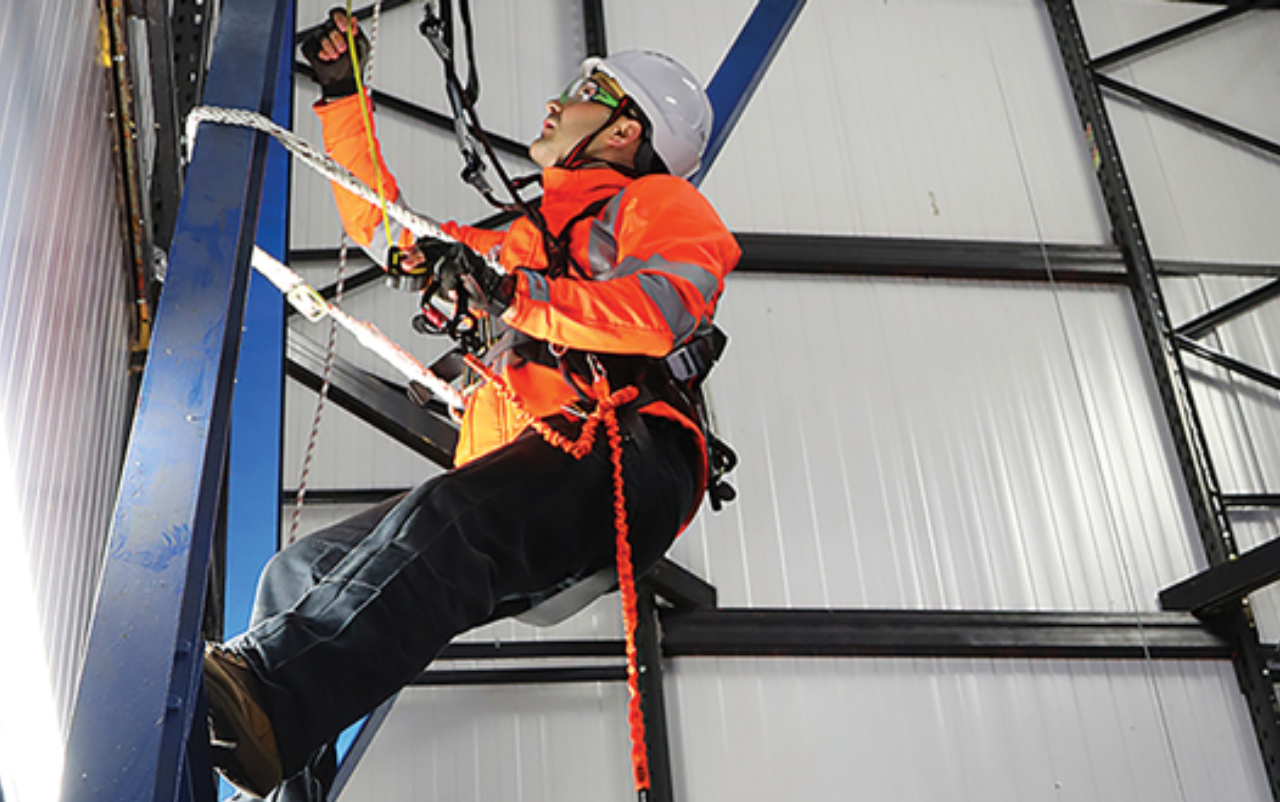
When is Height Safety Equipment Required?
Work at height poses a high degree of risk, with falls from a height accounting for over 20% of RIDDOR-reported workplace fatalities in 2020/21. Equipment to prevent falls is category III under the PPE Regulation, a classification reserved exclusively for activities that can result in irreversible injury or death. It is imperative to understand when to use height safety equipment and what to consider before carrying out work at height.
What is considered ‘working at height’?
Work at height is defined by the HSE as: ‘Work in any place where, if precautions were not taken, a person could fall a distance liable to cause personal injury’.
This encompasses work above ground level, as well as places at or below ground level, where one could fall to a lower level. It also includes places where one could fall from a ledge, and through an opening or fragile surface.
When should height safety equipment be used?
Planning, managing and completing work at height should follow the hierarchy of controls:
- Avoid – Wherever possible avoid work at height by using alternative methods and work practices.
- Prevent – Where work at height cannot be avoided, prevent falls by working from an existing place of safety, or utilising methods and equipment designed to prevent a fall from occurring, such as restraint systems.
- Minimise – If risk cannot be eliminated, minimise the distance and consequences of the fall by using appropriate fall arrest equipment.
Important considerations before carrying out work at height:
- Those involved in work at height must be trained and competent.
- The risks from working at height must be assessed, and appropriate work equipment selected.
- The risks from fragile surfaces must be controlled.
- Equipment for working at height must be properly inspected and maintained.
- Work at height must not be carried out when weather conditions could jeopardise safety.
- A procedure must be put in place to allow all operatives to report dangerous activity and equipment defects.
- A plan must be made for rescue emergencies.
Content created in partnership with JSP
JSP Safety Ltd is a leading UK manufacturer specialising in above‑the‑neck personal protective equipment (PPE), supporting workplace safety through education, product development and technical guidance.