How to Optimise Workstation Layout for Safety, Comfort and ESD Compliance
Many roles involve employees working at fixed stations for long periods. This is common in manufacturing, electronics assembly, laboratories and packing areas. The way these workstations are designed may have a significant impact on both safety and comfort.
Poor workstation layout can contribute to fatigue, strain and operational risks. In some environments, electrostatic discharge can also damage sensitive electronic components. By contrast, well designed workstations can help support both employee wellbeing and equipment protection.
Why workstation layout matters
Workstations are often designed around equipment placement or production flow. While these factors are important, the physical interaction between employees and their working environment should also be considered.
Employees who stand in one place for long periods may experience fatigue in the feet, legs and lower back. Hard flooring can increase pressure on joints and reduce comfort during longer tasks.
In electronics environments, static electricity can also present a risk. Uncontrolled electrostatic discharge can damage sensitive electronic components or disrupt processes. Effective workstation design therefore, considers both ergonomic support and static control where required.
Supporting comfort with anti-fatigue matting
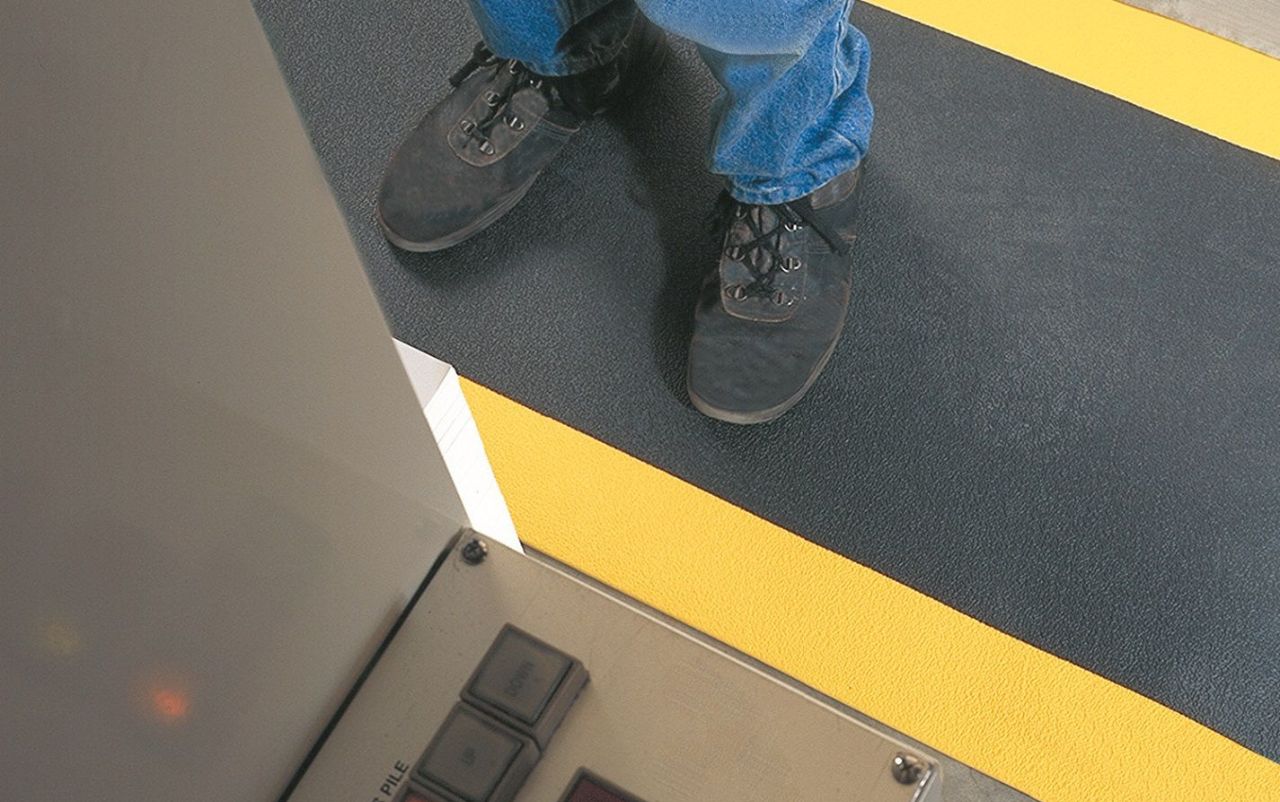
Anti-fatigue matting provides cushioning that helps reduce the physical strain associated with prolonged standing. The slightly flexible surface helps to encourage small movements in the feet and lower legs, which may help maintain circulation and reduce fatigue.
When planning workstation layouts, anti-fatigue mats should be positioned where employees stand most frequently. This is typically directly in front of benches, workstations or assembly areas.
Creating defined standing areas with appropriate support helps improve support underfoot and allows employees to work more comfortably throughout longer shifts.
Managing static risk at electronic workstations
In environments where electronic components are handled, electrostatic discharge must be carefully controlled. ESD matting helps dissipate static electricity safely by providing a controlled path to ground when connected to an appropriate grounding system.
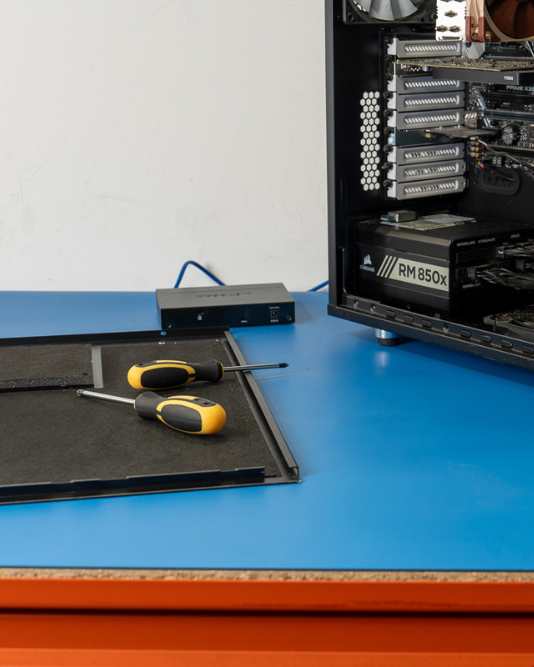
Worktop ESD mats are typically installed on assembly benches, inspection stations and repair work surfaces. This helps protect sensitive components while supporting safe handling practices. When combined with grounding systems and ESD accessories, these mats form an important part of an electrostatic control programme.
Choosing the right matting for the workstation
Different workstation environments require different types of matting depending on the task and level of static sensitivity.
ESD Kumfi Pebble
ESD Kumfi Pebble matting combines anti-fatigue support with static control. The cushioned surface helps reduce fatigue for employees who stand for long periods, while the static dissipative material helps safely dissipate electrostatic charge. This makes it suitable for electronics assembly areas where both ergonomic support and electrostatic protection are required.
ESD Worktop Matting
ESD worktop matting is designed for use on work surfaces where electronic components are assembled, inspected or repaired. The mat creates a controlled static-dissipative surface that helps prevent damage to sensitive equipment. Installed at workbenches and technical stations, it supports safe handling procedures and consistent ESD control.
Designing workstations that support employee health and safety and wellbeing
Well-designed workstations support both the task being performed and the people carrying it out. Incorporating ergonomic flooring and electrostatic protection into workstation layouts can reduce fatigue while protecting equipment.
Positioning anti-fatigue mats where employees stand most often and installing ESD protection at electronics work surfaces help create safer and more efficient working environments.
Workstation safety extends beyond tools and equipment. The surfaces employees stand on may play an important role in both comfort and compliance.
By integrating ergonomic matting and ESD protection into workstation design, businesses can support safer working practices while improving day to day comfort for employees.
Content created in partnership with Blue Diamond.