The Value of Knowing Your Foot Size When Choosing Safety Footwear
Most people don’t actually know their foot size. They know the size they usually buy, which isn’t the same thing. That number on the box is often a guess made years ago, repeated out of habit, and rarely questioned until something goes wrong.
When it comes to safety footwear, this matters more than you might think. Ill-fitting boots don’t just cause discomfort; they compromise the protection you’re relying on. Taking a few minutes to measure your feet properly can transform your experience of wearing safety footwear every day.
Why Most People Get Their Size Wrong
The size you’ve been buying for years might not be your actual size. Feet change over time, and the number you settled on at eighteen probably isn’t accurate at thirty-five or fifty.
Feet widen and lengthen with age. The ligaments and tendons that hold the foot’s structure together gradually loosen, allowing the foot to spread. Weight changes accelerate this process. Pregnancy can permanently increase foot size by half a size or more. Medical conditions like diabetes and arthritis affect foot shape and volume.
Beyond physical changes, many people never had their feet measured accurately in the first place. They tried on a few pairs, picked what felt reasonable, and stuck with that number ever since. Or they inherited a size from a parent’s assumption during childhood and never questioned it.
The result is millions of workers wearing safety footwear that doesn’t actually fit them. Some are in boots that are too small, causing toe compression, circulation problems, and accelerated fatigue. Others are in boots that are too large, experiencing heel slippage, instability, and blisters. Both groups assume this discomfort is simply what safety footwear feels like.
It isn’t. Properly fitted safety footwear is comfortable. The problem isn’t the footwear; it’s the sizing.
Why Sizing Matters More in Safety Footwear
In ordinary shoes, a slightly wrong size causes minor discomfort. In safety footwear, it causes genuine problems.
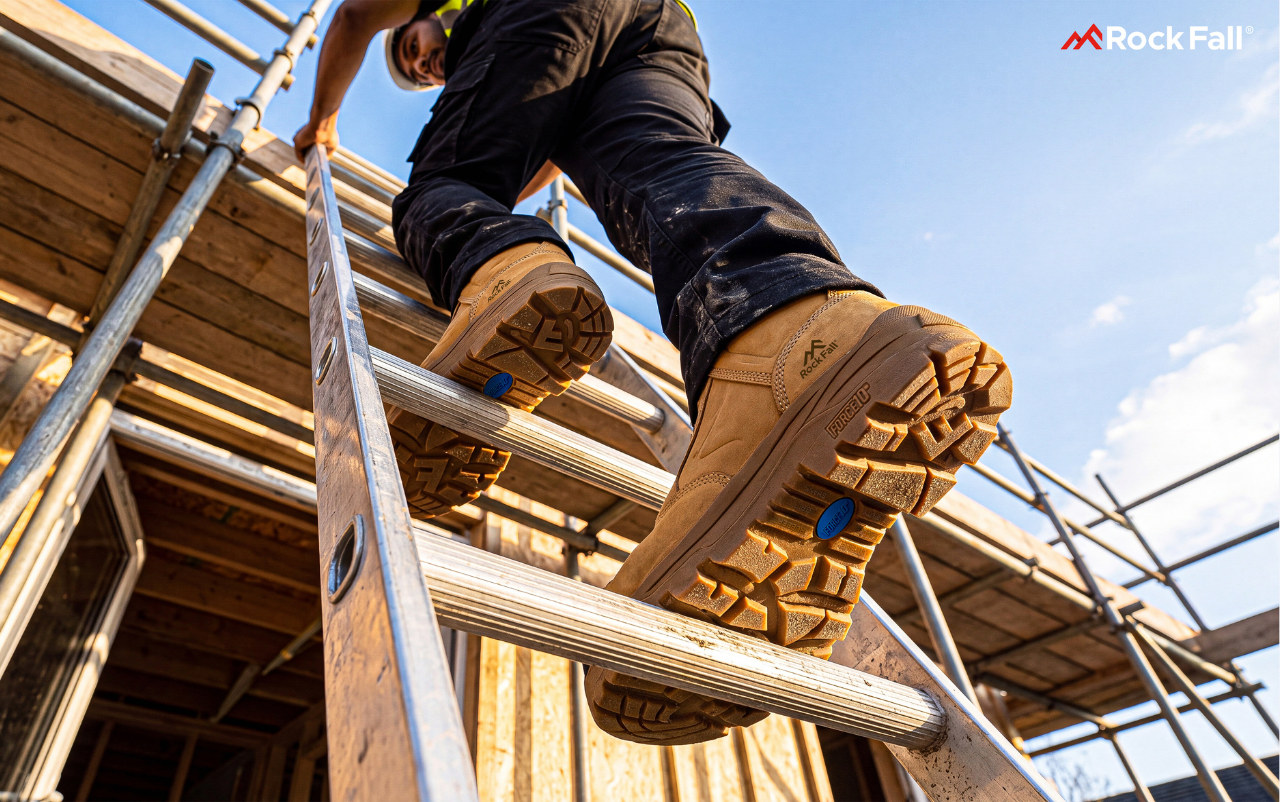
Safety footwear is engineered with protective features positioned in specific locations. The toe cap sits where your toes should be, with 10-15mm of clearance to absorb impact without transferring force to your foot. The penetration-resistant midsole protects the sole of your foot. Ankle support stabilises your ankle. These features only work when your foot is positioned correctly within the boot.
When boots are too large, your foot slides forward with each step. Your toes end up against the toe cap rather than behind it, eliminating the protective space. The heel lifts and rubs, creating blisters within hours. Your foot moves independently of the boot, reducing stability and increasing trip risk.
When boots are too small, your toes are compressed against the cap before any impact occurs. Circulation is restricted, causing cold feet, numbness, and long-term damage. The boot fights your foot rather than supporting it, creating fatigue that builds throughout every shift.
The difference between the right size and ‘nearly’ the right size might be just a few millimetres. But those millimetres determine whether your safety footwear protects you or works against you.
It’s more than just measuring the length of your feet
When people think about foot size, they think about length. UK 9 or UK 10. But length is only half the equation.
Width matters just as much. Two people can have identical foot lengths but completely different foot widths. One fits comfortably in standard width footwear while the other experiences constant pressure on the sides of their feet.
The standard sizing system doesn’t capture width well. A UK 9 tells you the length but nothing about the width. This is why someone can try multiple UK size 9 boots and find they all fit differently, some comfortable, others painfully tight or annoyingly loose.
If you’ve ever found that safety footwear in your usual size feels tight across the ball of your foot, causes pressure on your little toe, or leaves red marks on the sides of your feet, width is likely to be your issue. You don’t need a bigger size; you need your size in a wider fit.
Rock Fall offers wide fit options across multiple styles, plus an extra wide 6E fitting in the Otus RF200 for those who need maximum width. Knowing whether you need a standard or a wide fit is as important as knowing your length.
How to Measure Your Feet Properly
Measuring your feet takes less than five minutes and requires only basic equipment. The investment pays off every day you wear safety footwear.
When to Measure
Measure at the end of the day when your feet are at their largest. Feet swell throughout the day, particularly if you’ve been standing or walking. Measuring in the morning gives you a smaller reading that won’t account for afternoon swelling.
Stand while measuring. Feet spread under body weight, and you’ll be standing in your boots, not sitting.
Wear the socks you’ll use at work. Sock thickness affects fit, and measuring barefoot then wearing thick work socks creates a mismatch.
Measuring Length
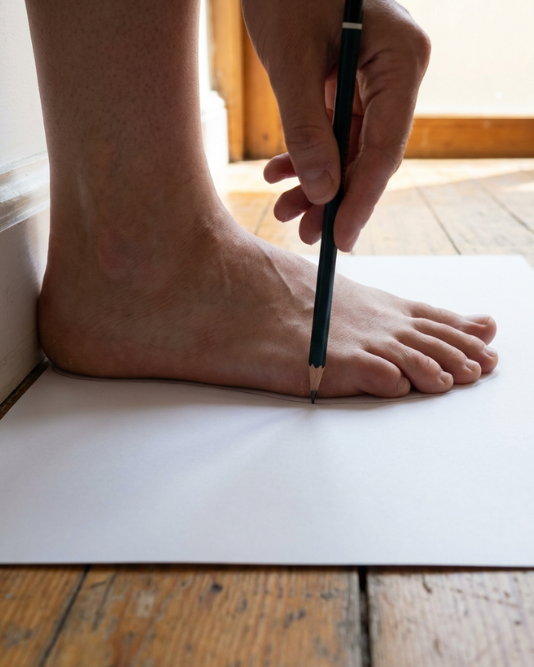
Place a piece of paper on a hard floor against a wall. Stand on the paper with your heel touching the wall, weight evenly distributed. Have someone mark the tip of your longest toe on the paper, or do it yourself carefully.
Remove your foot and measure from the wall to the mark in millimetres. This is your foot length.
Repeat for your other foot. Most people have slightly different sized feet. Use the larger measurement when selecting footwear.
Measuring Width
Width is measured as ball girth, the circumference around the widest part of your foot. You’ll need a flexible fabric tape measure.
Sit with your foot flat on the floor, weight on it. Wrap the tape measure around the widest part of your foot, across the ball at the base of the toes. Pull snug but not tight. Read the measurement in millimetres.
Compare your ball girth to standard measurements for your length. If you’re significantly above average, wide fit is likely appropriate.
Converting to Size
Use a size guide to convert your foot length to UK, EU, and US sizes. Remember that sizes vary slightly between manufacturers, so treat the conversion as a starting point rather than a guarantee.
Both Feet Are Different
Here’s something most people don’t realise: your feet aren’t identical. One is almost always slightly larger than the other, sometimes by half a size or more.
Always fit to your larger foot. It’s far easier to accommodate a slightly smaller foot in a correctly sized boot than to squeeze a larger foot into an undersized one. A boot that fits your larger foot perfectly will work for your smaller foot with perhaps a slightly less snug feel. A boot that fits your smaller foot will cause problems for your larger foot all day, every day.
This is another reason why knowing your actual measurements matters. If you’ve been buying based on your smaller foot, you’ve been compromising your larger foot unnecessarily.
Feet Change Over Time
The size you measured today won’t be accurate forever. Feet change, and periodic remeasurement ensures your footwear continues to fit properly.
Consider remeasuring every few years as a matter of routine, or whenever you notice changes in how your footwear feels. If boots that once fit comfortably now feel tight, your feet may have widened. If you’re experiencing new discomfort, the cause might be physical change rather than footwear quality.
Significant life changes often affect foot size. Weight gain or loss, pregnancy, certain medications, and medical conditions can all alter foot dimensions. After any such change, remeasuring is worthwhile.
The Fitting Process
Knowing your measurements is the starting point. The fitting process confirms they translate into comfortable footwear.
When trying safety footwear, check length first. There should be approximately 10-15mm, roughly a thumb’s width, between your longest toe and the end of the boot. You should be able to wiggle your toes freely.
Check width next. The fit across the ball of your foot should be snug but not tight. You shouldn’t feel pressure on the sides of your feet or on your little toe.
Check the heel. It should feel secure with minimal lift when walking. If your heel slides up and down, the boot is too large or the wrong shape for your foot.
Walk around. Comfort while standing still doesn’t guarantee comfort while moving. Check for any rubbing, pressure points, or instability during actual movement.
If something doesn’t feel right, it probably isn’t. Don’t convince yourself a boot will “break in” eventually, or that ongoing discomfort is normal. Properly fitting safety footwear is comfortable from the first wear. Leather in particular can loosen after time, which could contribute to the “break in” effect. As a consequence, the wearer can become used to slightly looser fitting footwear.
Professional Fitting Services
For the most accurate assessment, professional foot scanning is key. Whilst manual scanning provides precise measurements by capturing length, width, and pressure, digital scanning also evaluates the three-dimensional shape of your foot to identify further features that affect fit. Rock Fall offers both manual and digital foot scanning services in partnership with Lyreco Intersafe that measures your feet precisely. We also can recommend appropriate styles and sizes based on your individual foot shape as part of this process. This removes guesswork from the selection process and increases the likelihood of getting the fit right first time.
Worth the Investment
Taking time to know your actual foot size isn’t just about comfort, though comfort matters. It’s about ensuring your safety footwear can do its job.
Properly sized boots position protective features correctly. They keep your foot stable and secure. They reduce fatigue so you stay alert throughout your shift. They prevent the blisters, pressure points, and long-term damage that ill-fitting footwear causes. Five minutes measuring your feet for a lifetime of better-fitting safety footwear.
Your feet carry you through every shift. Make sure you’re giving them the right foundation.
Related Articles
- Sizing Guide for The Perfect Fitting Safety Boots | Lyreco Intersafe
- Choosing Safety Footwear Guide | Lyreco Intersafe
Content created in partnership with Rock Fall.