Safety Boot Sizing Guide for Selecting The Perfect Fitting Safety Boots
Getting the right size safety boots is essential for comfort, protection, and performance at work. Poorly fitting boots can cause blisters, fatigue, foot pain, and instability, while the correct fit supports your feet throughout long shifts and helps your safety footwear perform as intended.
Whether you’re buying your first pair of safety boots or replacing worn-out footwear, this guide explains how to measure your feet accurately, understand sizing, and choose boots that fit correctly from day one.
Why Correct Safety Boot Sizing is Important
Safety footwear does more than standard shoes. Your boots need to protect your feet from hazards while remaining comfortable during long hours on site.
Protection
A correctly fitted safety boot helps to ensure:
- Toe caps sit in the right position to protect against impact
- Stability is maintained on uneven ground
- Feet remain supported during movement and lifting
- Reduced risk of slipping or tripping caused by loose footwear
Boots that are too tight may restrict movement and circulation, while boots that are too loose can cause instability and rubbing.
Comfort
Long shifts place constant pressure on your feet. Poorly fitted footwear can lead to:
- Blisters and rubbing
- Foot fatigue
- Hot spots and pressure points
- Arch pain and heel discomfort
Work socks also add extra bulk, and feet naturally swell during the day, especially in physically demanding environments.
Long-Term Foot Health
Wearing the wrong size repeatedly may contribute to issues such as:
- Bunions
- Plantar fasciitis
- Hammertoes
- Joint and back discomfort
A properly fitted boot supports natural foot movement and reduces strain on your knees, hips, and lower back.
How to Measure Your Feet at Home
Measuring your feet correctly is the best way to choose the right safety boot size.
What You’ll Need
- A sheet of paper
- A pen or pencil
- A ruler or tape measure
- The work socks you normally wear
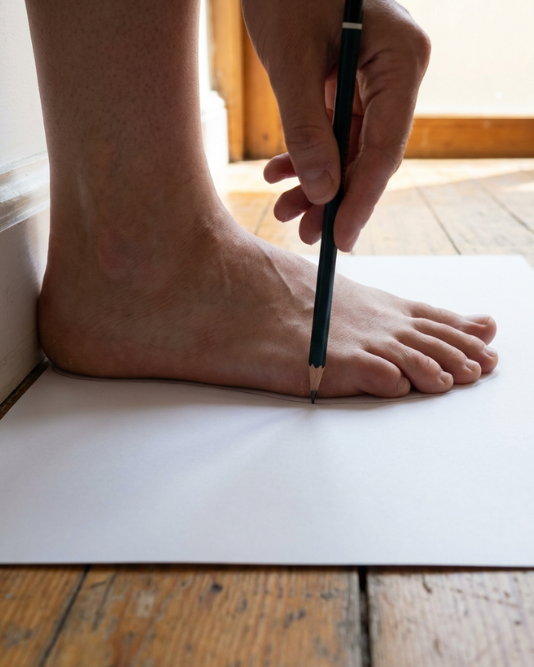
Step 1: Measure at the End of the Day
Feet naturally expand throughout the day, especially during physical activity. Measure your feet in the evening or after work to get the most accurate size.
Place the paper on a hard floor against a wall.
Step 2: Position Your Foot
Stand on the paper with your heel touching the wall. Make sure your weight is evenly distributed.
Step 3: Mark Your Foot Length
Mark the end of your longest toe. For some people this may be the big toe, while for others it may be the second toe.
Step 4: Measure Width
Mark the widest points on both sides of your foot around the ball area.
Step 5: Measure Your Foot
Use a ruler or tape measure to record:
- Length from heel to longest toe
- Width across the widest part of your foot
Measure both feet and use the larger measurement when selecting your size.
Understanding Safety Boot Sizes
Safety boots may fit differently depending on the manufacturer and style. Always use brand-specific sizing guides where possible.
General Sizing Advice
- If you are between sizes, consider sizing up slightly
- Always fit boots while wearing your normal work socks
- Thick thermal socks may require additional space
- Insoles or orthotics can affect fit
Men’s UK Safety Boot Size Guide
| Foot Length (cm) | UK Size |
| 24.5 | 6 |
| 25.5 | 7 |
| 26.5 | 8 |
| 27.5 | 9 |
| 28.5 | 10 |
| 29.5 | 11 |
| 30.5 | 12 |
| 31.5 | 13 |
Women’s UK Safety Boot Size Guide
| Foot Length (cm) | UK Size |
| 22.0 | 3 |
| 23.0 | 4 |
| 24.0 | 5 |
| 25.0 | 6 |
| 26.0 | 7 |
| 27.0 | 8 |
Why Width Matters
Length is only part of the fit. Width is equally important.
Signs Your Boots Are Too Narrow
You may need a wider fit if:
- The sides of your feet feel compressed
- You experience rubbing on your little toes
- You notice numbness after a few hours
- The upper material bulges over the sole
Signs Your Boots Are Too Wide
You may need a narrower fit if:
- Your heel slips while walking
- Your foot slides forward inside the boot
- You need to overtighten laces to feel secure
Some safety footwear ranges offer wide-fit options for workers who need extra room.
What a Perfect Safety Boot Fit Should Feel Like
When trying on safety boots, use the following checklist.
Toe Area
Your toes should:
- Have around 10–15mm of space at the front
- Move freely without touching the toe cap
- Feel comfortable without pressure or pinching
The protective toe cap should sit ahead of your toes rather than directly on top of them.
Heel Fit
Your heel should remain secure with only minimal movement while walking.
Excessive heel slip often causes blisters and instability.
Width and Side Fit
The boot should feel snug but not tight.
You should not feel excessive pressure on the sides of your feet, and the upper material should not stretch excessively.
Arch Support
Good safety boots should support the natural shape of your foot and distribute pressure evenly.
If your arches ache after standing for long periods, you may benefit from supportive footbeds or insoles.
Movement Test
Walk around in the boots and test movement:
- Walk on hard flooring
- Climb stairs if possible
- Squat and bend your knees
- Stand on one foot briefly
The boot should flex naturally with your foot while still feeling stable.
Common Safety Boot Fit Problems and Solutions
Even with careful measurement, some fit issues may still occur.
Problem: Toes Touching the Front
Possible Causes
- Boots are too short
- Feet sliding forward
- Laces too loose
Solutions
- Try going up half a size
- Tighten lacing around the ankle
- Use thicker socks or improved insoles if needed
Problem: Heel Slipping
Possible Causes
- Boots too large
- Boots too wide
- Incorrect lacing
Solutions
- Use heel-lock lacing techniques
- Consider a narrower fit
- Try a different style or size
Problem: Pressure on the Sides
Possible Causes
- Boots too narrow
- Feet swelling during shifts
- Incorrect shape for your foot type
Solutions
- Choose a wide-fit style
- Look for a roomier toe box
- Consider softer upper materials
Problem: Arch Pain or Foot Fatigue
Possible Causes
- Lack of support
- Poor-quality footbeds
- Boots too large or unsupportive
Solutions
- Replace standard insoles with supportive alternatives
- Choose footwear with anti-fatigue technology
- Seek professional advice for persistent issues
Problem: Pressure on the Top of the Foot
Possible Causes
- High instep
- Overtight lacing
- Low-volume boot design
Solutions
- Adjust lacing patterns
- Skip eyelets over pressure points
- Choose boots with padded tongues or adjustable fit systems
Safety Boot Fit by Footwear Type
Different styles of safety footwear may fit differently.
Traditional Safety Boots
These generally provide more support and protection but can feel heavier and more structured.
They often allow slightly more room due to thicker materials and waterproof constructions.
Safety Trainers
Safety trainers usually fit closer to athletic footwear and may feel tighter than traditional boots.
If you prefer extra room, you may benefit from going up half a size.
Waterproof Safety Boots
Waterproof linings can slightly reduce internal space.
Always try waterproof boots on with the socks you’ll wear at work.
Women’s Safety Boots
Women-specific safety footwear is designed around female foot shapes rather than simply reducing men’s sizes.
This often provides:
- Better heel fit
- Improved arch support
- Reduced slipping
- Better overall comfort
Breaking In New Safety Boots
Even correctly fitted safety boots may need a short break-in period.
Tips for Breaking In Boots Safely
- Wear them indoors first
- Gradually increase wear time over several shifts
- Use quality work socks
- Keep laces adjusted correctly
- Address rubbing early before blisters develop
Most quality safety footwear becomes more comfortable as materials soften and adapt to your feet.
When to Consider Professional Foot Measuring
Some workers struggle to find comfortable safety boots despite trying multiple sizes.
Professional foot scanning or fitting services may help if:
- Your feet are noticeably different sizes
- You have bunions or foot conditions
- You regularly experience discomfort
- You wear safety footwear for long hours every day
- You need orthotics or specialist support
Professional fitting can identify issues such as arch type, pressure distribution, and width requirements more accurately than home measuring.
Before purchasing your next pair of safety boots:
- Measure both feet carefully
- Try boots on with your normal work socks
- Check length, width, and heel fit
- Allow room for natural foot swelling
- Walk and move naturally while testing fit
- Choose styles designed for your working environment
The correct fit improves comfort, reduces fatigue, and helps your footwear perform properly throughout the working day.
A well-fitted safety boot is an investment in both protection and long-term foot health.
Content created in partnership with Rock Fall.
BOOK A SAFETY FOOTWEAR
SIZING DAY
Choosing the right fit is essential. Our team can visit your site to provide expert guidance, helping employees select correctly fitting footwear as well as styles that best suit their role and preferences.