Working at Height Safety: How to Reduce Risk and Prevent Falls
Latest HSE figures state that falls from height were the leading cause of fatal accidents in 2024/25. 35 people suffered fatal injuries, and 8% of all non-fatal injuries were falls from height across the same timeframe. Peter Bennett, chair of the No Falls Foundation charity, said 107 people were killed from falls from height in the past five years.
You could argue that a fall from height will generally be more serious than tripping over a wire or being struck by a moving object, hence the high figures, but it doesn’t quite paint a full picture of potential causality.
Many companies don’t take working at height or the corresponding safety precautions seriously. The attitude of “well, we’ve never had an injury before” or “we’ve always done it this way” is harmful and still prevalent on sites across many industries.
Companies often believe that what they have in place is good enough, and because working at height is one of the more ‘obvious’ hazards in a workplace, complacency can often take over. Naturally, this leads to an increase in injuries.
What is working at height?
Working at height refers to work in any place where, if precautions were not taken, a person could fall a distance liable to cause personal injury. This includes work above ground level where you could fall from an edge or into an opening in a floor on the ground. Working at height does not include a slip or trip on the level, as a fall from height has to involve a fall from one level to a lower level.
Now that we’ve defined what constitutes ‘working at height’, an important question is whether companies and managers themselves understand what’s considered working at height.
Not that it’s any excuse, but does this lack of understanding lead to lax procedures and processes?
Are companies doing enough to reduce injuries from height?
Ultimately, the buck stops with the company. It’s down to them to ensure standards and procedures are put in place. It’s not good enough for the company to be reactive to an incident. All companies must be proactive in their approach to health and safety, and this includes hazards across the entire site, not just working at height.
Every injury and fatality caused by a fall from height is avoidable, and companies must remain consistent in their approach and application of standards to ensure complacency doesn’t creep in. Standards come from the leadership team, and this safety-first culture needs to make its way through the business to line managers, employees, and contractors.
How do companies protect staff working at height?
Prevention:
The first point of call for keeping staff safe when working at height is prevention. If working at height can be avoided, it should be. Examples of prevention include:
- Carrying out work at ground level as much as possible
- Using extendable tools instead of ladders
- Lowering equipment to the ground for repair
- Use drones for inspections or surveys
Planning:
Before work is carried out, companies must survey the site and:
- Perform risk assessments
- Select appropriate equipment and PPE
- Identify safe access and working platforms
- Consider weather conditions
- Plan emergency rescue procedures
Competence:
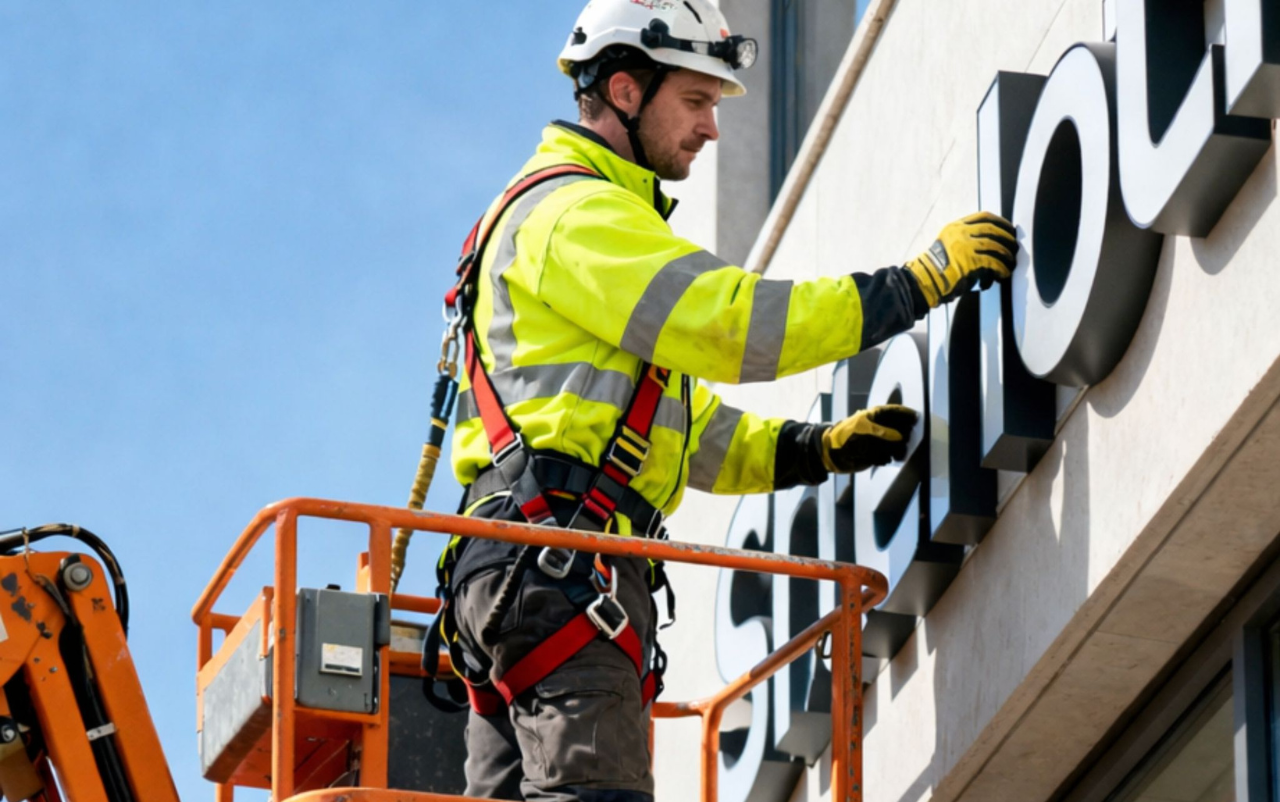
Workers must be trained and competent to perform work at height safely. This includes training in hazard recognition, equipment usage, safe access methods and fall protection. For example, would a team know that when using a cherry picker or scissor lift, they must leave one person at ground level in case they get stuck? Proper training educates staff on things like this to ensure everyone remains safe on site.
Inspection:
All equipment used for working at height must be:
- Suitable for the job
- Regularly inspected
- Properly maintained
- Checked for damage or defects
Methods that can help prevent injuries when working at height
PPE:
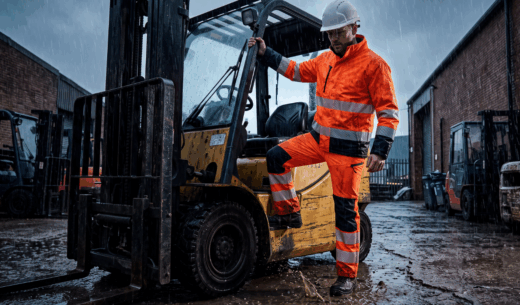
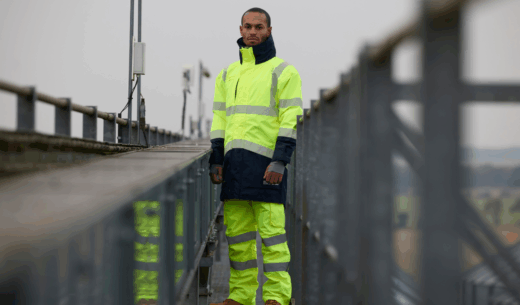
It’s important that all workers wear the correct PPE when working at height. Obvious examples include safety helmets and, where required, harnesses for tasks involving cherry pickers or scissor lifts. However, PPE such as suitable footwear, gloves, and hi-vis clothing is just as important for maintaining safety on site.
Examples of relevant PPE:
- Harnesses
- Head protection
- Footwear
- Gloves
- Eye and face protection
- Hi-vis
Safety signs:
Safety signs are a fundamental part of ensuring safety while working at height. PPE is essential and should be at the top of everyone’s list when a project starts. How do companies enforce this? They start with mandatory PPE signs that indicate which items of clothing must be worn on the job. For example, this could be hard hats, harnesses, safety boots and gloves.
PPE safety mirrors are also an effective reminder of safety standards and the required PPE before starting work.
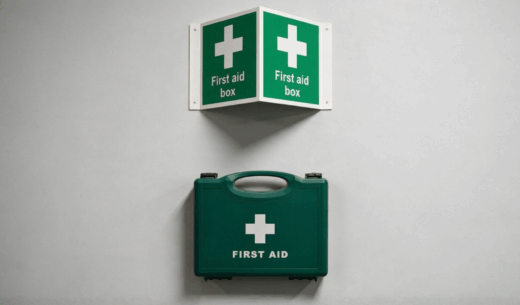
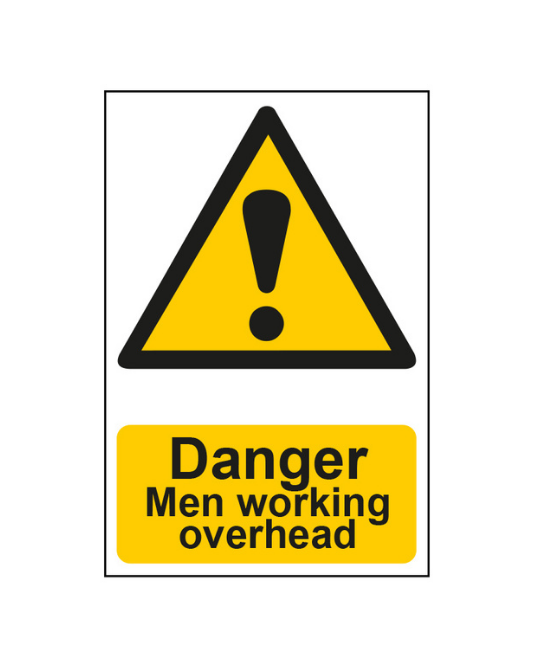
Access and situational awareness signs are also needed to warn staff and visitors about hazards on site. It’s important to note that signs are just as crucial for visitors and members of the public as they are for staff members. You could argue they are more important for visitors and pedestrians, as they’re unlikely to be familiar with the site and may not even be aware that such hazards exist.
Access and situational signs include ‘danger fragile roof’, ‘scaffolding incomplete’, ‘warning construction site’, and ‘danger men working overhead’.
Tagging Systems:
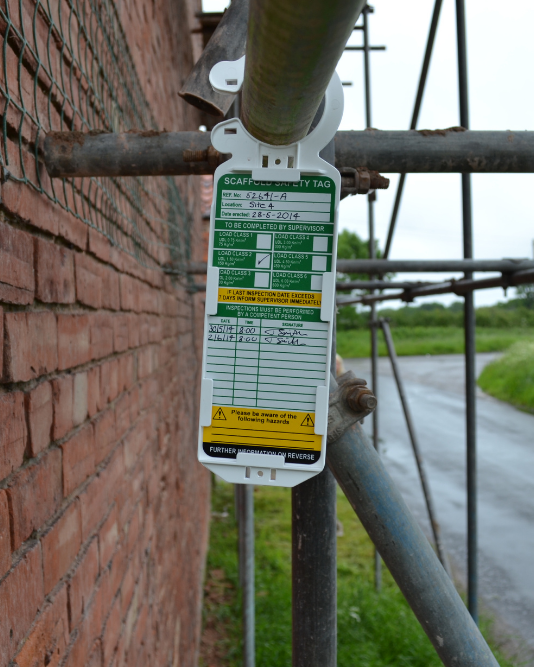
Equipment must be checked before every use to ensure it is suitable for the job and free from any damage or defects. This includes ladders, scaffolding, and Mobile Elevating Work Platforms (MEWPS).
Companies should also ensure that equipment is thoroughly inspected, either daily or weekly. Tagging systems are a great way to ensure these inspections are recorded, and also act as a reminder for people using equipment that they need to conduct an inspection.
Tagging systems include a date, signature, and defects column to record the date of each inspection, who conducted it, and whether any defects or issues were found.
Lifting Operations and Lifting Equipment Regulations (LOLER) 1998 is UK legislation that governs the safe use of lifting equipment at work. It applies to employers, self-employed people, and anyone responsible for lifting equipment. The legislation covers equipment used to lift or lower loads, such as cranes, forklifts, and Mobile Elevating Work Platforms (MEWPs).
Core requirements of LOLER mean that equipment must be:
- Strong and stable enough for its intended use
- Marked with safe working loads (SWL)
- Positioned and installed safely
- Used safely
- Operated by competent people
- Regularly inspected and thoroughly examined
Regarding inspection and recording important information, tagging systems are the perfect solution for businesses to stay compliant and ensure equipment is fit for purpose and ready to use.
Ladder Lockout:
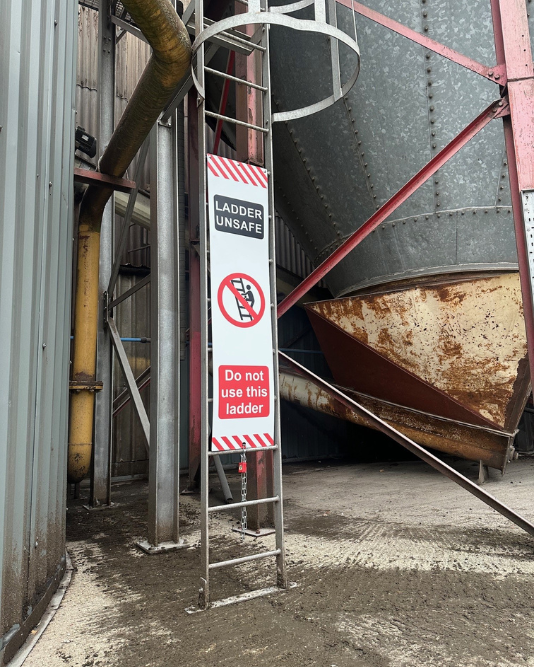
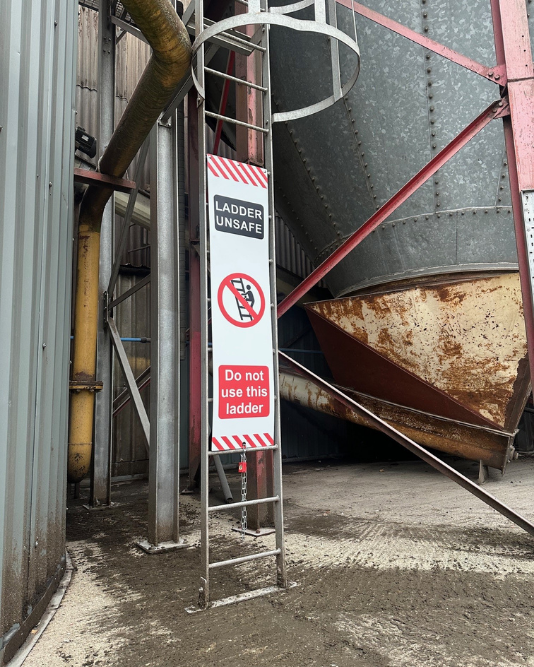
If there is an area where people must not go, ladder access can be cut off using ladder lockout. For example, if there are loose boards in the area, a ladder lockout prevents access, thereby preventing people from falling through to the floor below.
Ladder lockout devices are also useful for preventing the use of damaged ladders. If a ladder has a broken rung or is unstable and needs repair, a ladder lockout prevents someone from using it and falling off.
Common Mistakes When Managing Working at Height
Failing to inspect equipment regularly: Access equipment that is not inspected frequently may develop hidden faults
Poor visibility of inspection tags: Damaged or difficult-to-read tags reduce their effectiveness
Allowing damaged ladders to remain in use: Faulty ladders should be immediately locked out or removed
Inadequate worker training: Workers must understand how to survey sites, identify risks, and use their equipment
Ignoring regulatory requirements: Failing to follow LOLER inspection schedules can lead to safety risks and regulatory penalties
In order to keep staff safe when working at height, the most important thing a company can do is change its culture to encourage a safety-first mindset. This goes for all safety, not just working at height. However, leadership must implement strict safety standards and procedures that are adopted by line managers and workers.
There should be proper plans, safety signage and tagging systems in place before work starts and employees should know the processes they need to follow. For example, knowing they need to survey the site, complete inspection tags and wear the correct PPE.
If proper standards are followed throughout the workplace on every site, businesses can start eliminating these preventable injuries from working at height. Workers should go home to their families after a hard day at work, rather than contributing to another HSE statistic, and companies have the power to make positive changes to ensure proper safety processes and procedures are in place.

Content created in partnership with Spectrum Industrial.