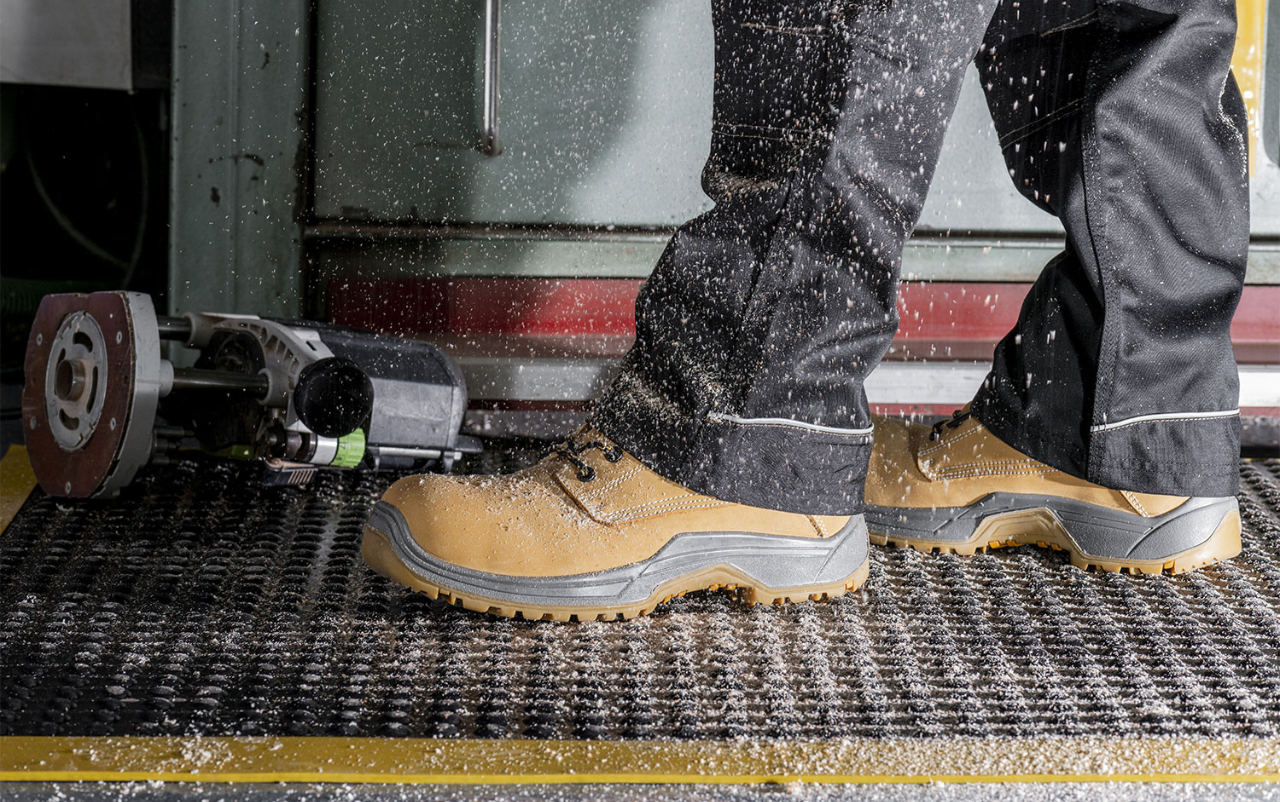
Standing Strong: Reducing Standing Fatigue at Work
Many roles require employees to spend long periods standing. This is common in environments such as, manufacturing, retail, laboratories, packing stations and service counters. While standing may appear less obviously strenuous than forms of physical labour, remaining on hard flooring for extended periods places continuous strain on the body and lower limbs.
Without appropriate support, prolonged standing can lead to fatigue, discomfort and longer-term health concerns. Understanding the physical impact of hard flooring and the role of ergonomic solutions can help organisations create safer and more comfortable working environments.
This article explains why standing fatigue occurs and how anti fatigue matting can support wellbeing and productivity in workplaces where employees remain on their feet for long periods.
Why prolonged standing causes fatigue
Standing on hard surfaces such as concrete, laminate or tiled flooring places continuous pressure on the body. Unlike walking, which involves regular movement and changes in muscle activity, standing still requires muscles to remain engaged to maintain balance and posture.
This sustained muscle contraction can reduce the efficiency of blood circulation and place additional strain on joints and connective tissue.
Common effects of prolonged standing include:
Muscle fatigue: Reduced circulation and sustained muscle activation can cause muscles in the feet and lower legs to tire more quickly, leading to discomfort and reduced energy levels.
Joint compression: Hard surfaces transfer load directly through the feet into the knees, hips and lower spine, increasing pressure on joints over time.
Long term strain: Extended exposure to unsupported standing environments may contribute to or increase the risk of conditions such as plantar fasciitis, lower back pain and circulatory problems.
These risks make ergonomic workplace design an important consideration in environments where standing work is unavoidable.
How anti-fatigue matting supports the body
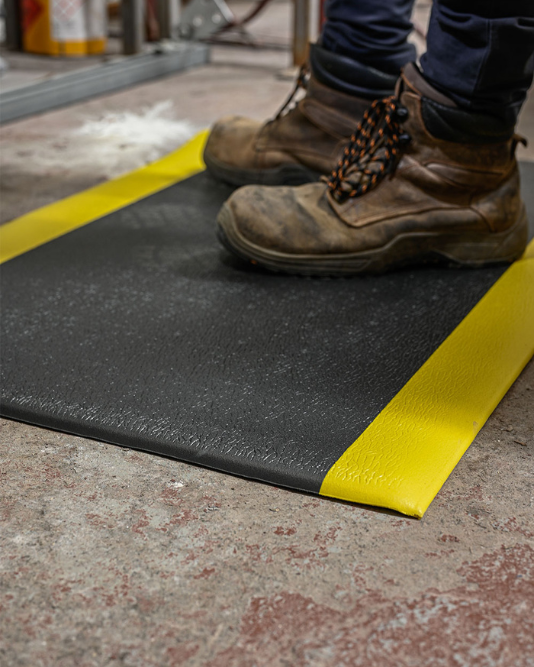
Anti-fatigue matting is designed to improve comfort and reduce physical strain during prolonged standing. Unlike rigid flooring, the cushioned surface of an anti-fatigue mat provides a small degree of flexibility underfoot.
This encourages subtle micro-movements in the feet and lower legs. These movements allow muscles to contract and relax naturally, which helps promote circulation and helps reduce fatigue.
The result is improved weight distribution, reduced pressure on joints and a more comfortable working position. In busy workplaces, this can help employees remain comfortable and maintain concentration throughout longer shifts.
Anti-fatigue matting can therefore acts as an ergonomic intervention rather than simply a softer floor surface.
Selecting the right anti-fatigue solution
Different working environments require different types of matting. Factors such as surface conditions, electrical sensitivity and level of industrial activity all influence the most suitable choice.
Kumfi Pebble
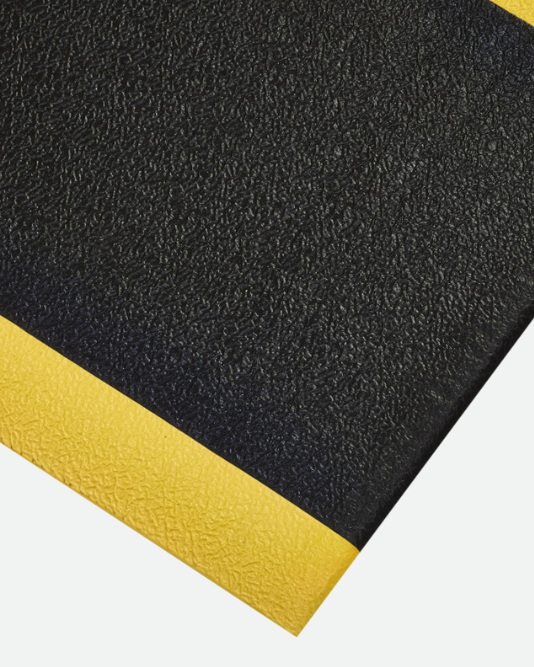
Kumfi Pebble mats are designed with anti-fatigue in mind for dry indoor environments such as workshops, laboratories and service areas. The mat is manufactured from closed cell vinyl foam and features a textured surface that improves comfort while maintaining stability underfoot. Bevelled edges help reduce trip risk, while optional high visibility borders support hazard awareness in busy work areas.
ESD Kumfi Pebble
In environments where electrostatic discharge presents a risk, ESD Kumfi Pebble provides the same ergonomic support while helping control static electricity. This makes it suitable for electronics manufacturing, technical environments and certain healthcare settings where sensitive equipment is present.
Ergotred
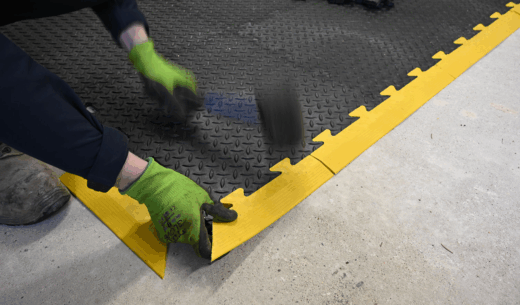
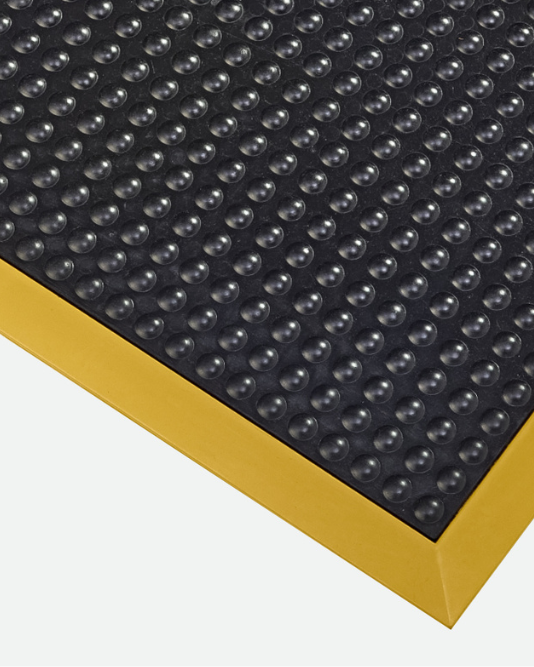
Ergotred mats are designed for demanding industrial environments where durability and support are essential. The thicker rubber construction provides enhanced cushioning, while the domed surface encourages small foot movements that may help promote circulation during long shifts. The suction cup backing helps keep the mat securely in place and high visibility safety edges improve awareness in busy production or warehouse areas.
Why ergonomic flooring supports wellbeing and productivity
Supporting employees who work on their feet is an important part of workplace safety and wellbeing. Anti-fatigue matting provides a practical way to reduce physical strain without major changes to the working environment. Improving comfort can help reduce fatigue related distraction, support employee wellbeing and contribute to more consistent productivity during long shifts.
From a safety management perspective, ergonomic improvements also demonstrate a proactive approach to workplace health and support broader workplace health objectives, particularly in roles where prolonged standing is unavoidable.
Standing for long periods does not have to result in discomfort or fatigue. By understanding the physical impact of hard flooring and introducing appropriate ergonomic solutions, organisations can create working environments that support both safety and wellbeing. Anti-fatigue matting provides a practical and effective way to reduce strain, improve comfort and help employees remain supported throughout the working day.
Content created in partnership with Blue Diamond.