Cable Chaos? How to Keep Walkways Safe with Correct Cable Management
Trips and falls remain one of the most common causes of workplace injury. Walkways that contain trailing or poorly managed cables present a particular risk, especially in offices, warehouses, temporary workspaces and public environments.
According to the Labour Force Survey, approximately 680,000 workers sustained a non-fatal workplace injury during 2024 and 2025. This represents an increase compared with the previous year. Many of these incidents are linked to preventable hazards, including unsecured cables crossing pedestrian routes.
Effective cable management is not only about appearance. It is a fundamental part of maintaining safe and compliant access routes. This article outlines the risks associated with unmanaged cables and shares best practice guidance for creating safer walkways using appropriate cable protection.
The hidden dangers of unmanaged cables
Loose or trailing cables may appear minor, but they introduce several safety and operational risks.
First, cables that cross walkways create unpredictable trip hazards. They can catch footwear, snag equipment and interfere with the movement of people and trolleys. In busy environments, this significantly increases the likelihood of injury.
Second, cables that are repeatedly stepped on or rolled over can become damaged. Over time, this may lead to power interruptions, data loss or electrical faults. In more serious cases, damaged cables can present a fire risk.
Managing cables correctly reduces these risks at source rather than relying on warning signs or temporary measures.
Slip resistance depends on the level of friction between footwear and the walking surface. When moisture is present, smooth materials allow a thin liquid layer to form between the shoe and the floor. This significantly reduces grip.
Anti-slip GRP surfaces work differently. The textured aggregate rises above the moisture layer, allowing direct contact between footwear and surface. This creates mechanical interlock rather than relying on surface tension alone.
This is why GRP continues to perform in environments where timber becomes smooth, metal becomes slippery and concrete wears over time. The benefit is most noticeable on step edges and level changes, where secure foot placement is critical.
Best practice for creating tidy and safe walkways
Creating a safe and organised walkway requires planning and consistency. Where possible, cables should be routed along walls or fixed perimeters rather than across open floor areas. This reduces exposure and keeps walkways clear.
Cables should be grouped together using suitable ties or wraps to prevent tangling and
reduce clutter. This makes routes easier to manage and maintain. Any cable that must cross a pedestrian route should be properly protected. Temporary fixes such as tape are not suitable, as they degrade over time, leave residue and can create additional trip hazards.
Using cable protectors to reduce trip risk
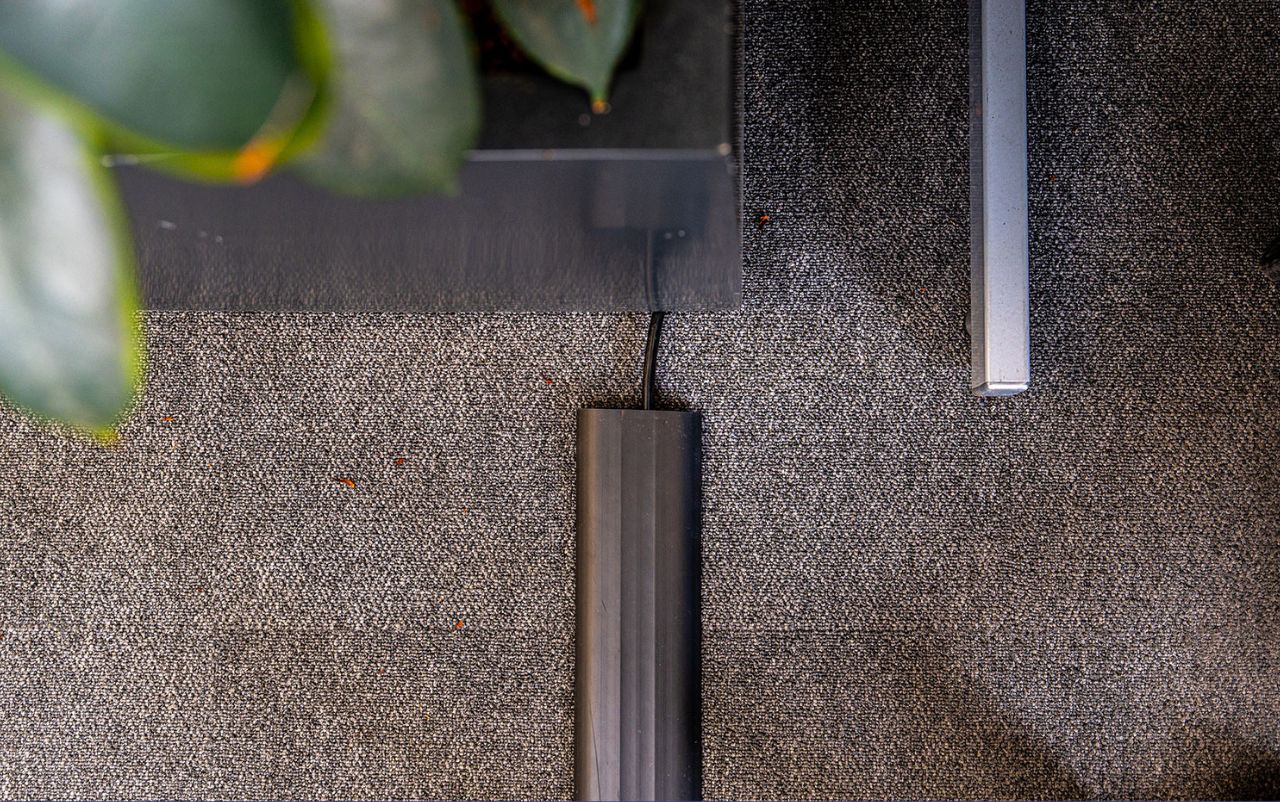
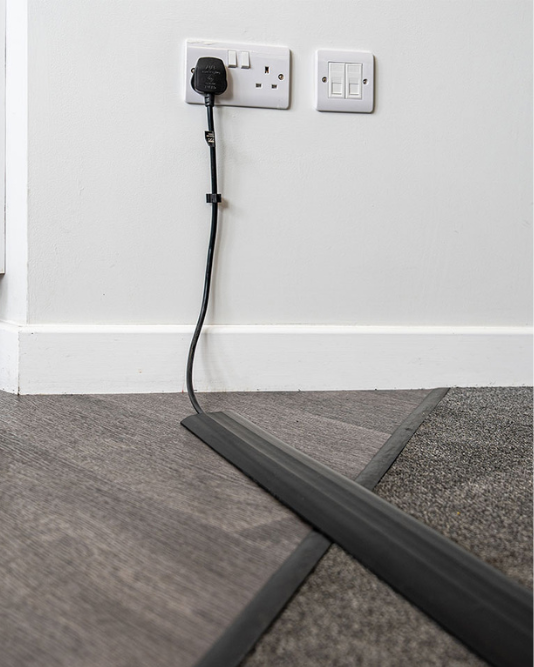
Cable protectors provide a simple and effective way to manage cables that cross walkways. They secure cables in place while creating a visible and stable crossing point.
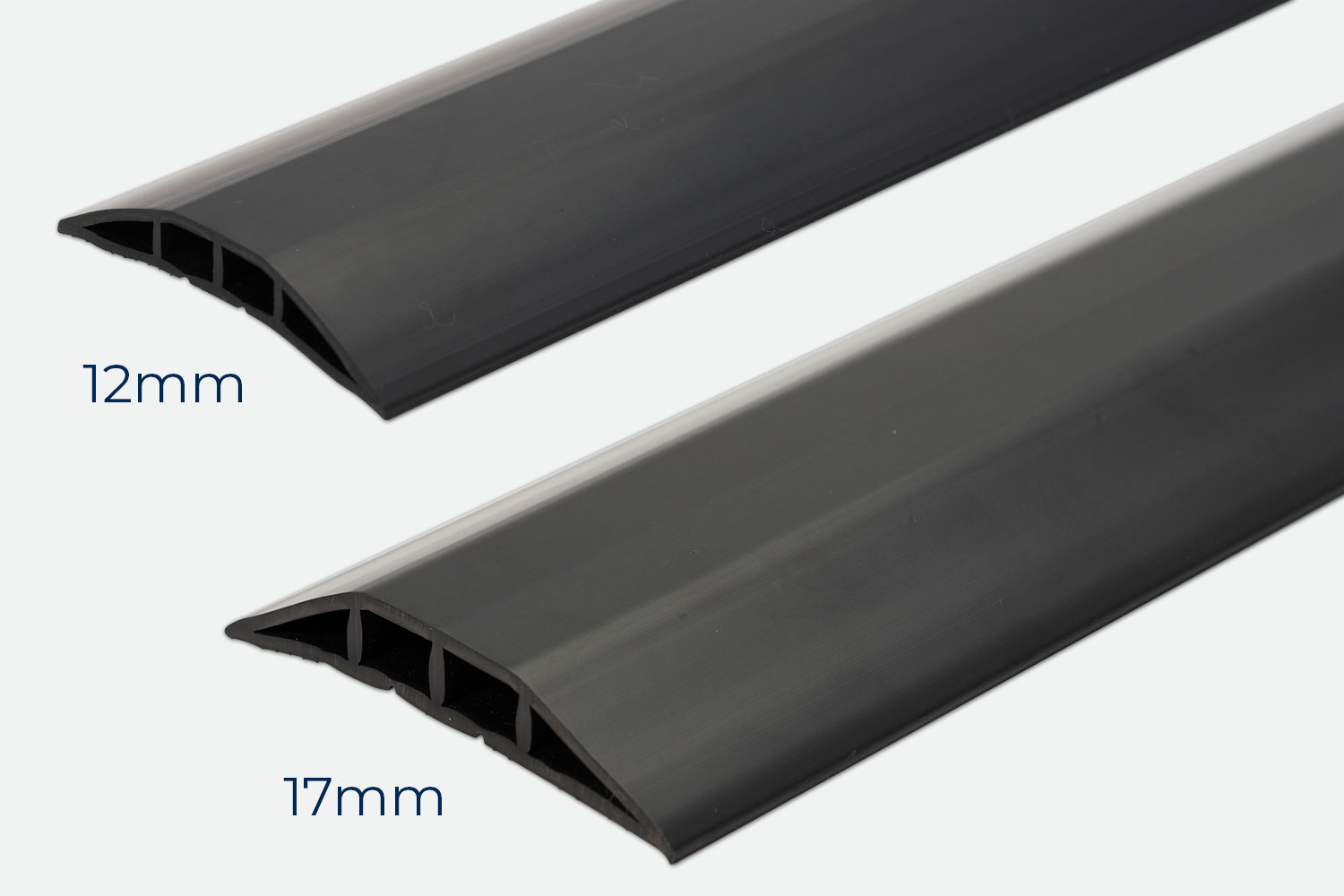
For low traffic environments such as offices or meeting spaces, a 12mm PVC Cable Protector offers a practical solution. Its low-profile design helps minimise disruption while protecting thin power or data cables that cross doorways or walkways.
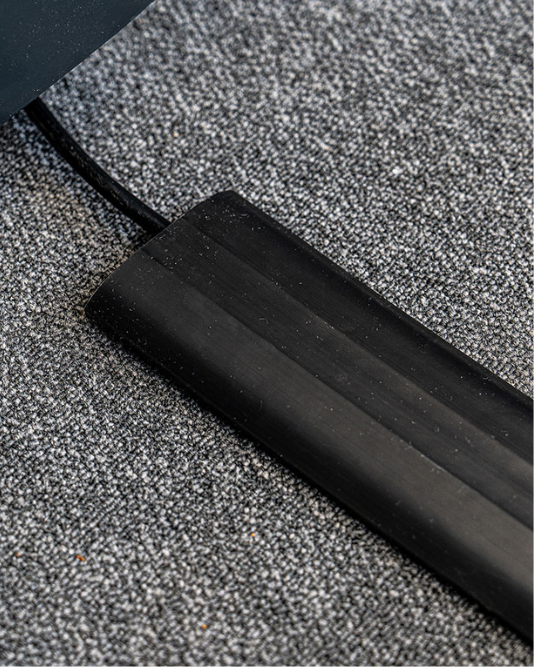
In higher traffic environments, such as warehouses or workshops, a 17mm PVC Cable Protector is designed to manage thicker industrial cables. Manufactured from durable, non slip PVC, it provides protection for both cables and people, even where trolleys or carts are in regular use.
Selecting the correct protector depends on the environment, the type of cable and the level of foot or equipment traffic.
Why tidy zones support safety and productivity
Well managed walkways ultimately support safer movement and reduce the likelihood of incidents. They also protect equipment, reduce maintenance issues and contribute to a more professional looking working environment.
Implementing a consistent cable management approach helps organisations demonstrate proactive risk management. It also supports compliance with general workplace safety expectations relating to floors and traffic routes.
Safe walkways start with clear routes and secure surfaces. By identifying cable related risks and applying the right protective solutions, organisations can reduce trip hazards and maintain safer, more efficient environments just through correct cable management.
Content created in partnership with Blue Diamond.