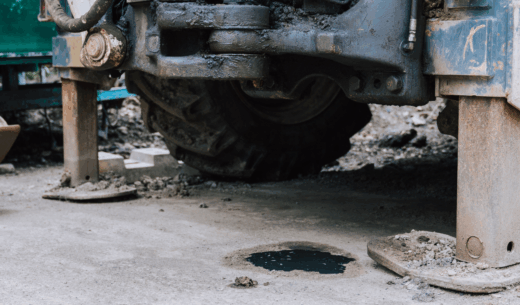
The Perfect Spill Response: How to Manage Workplace Spills
Any organisation where liquids are stored, handled or transported should have trained staff and appropriate spill response products readily available. A clear and practical spill response plan helps protect people, safeguard the environment and support compliance with relevant legislation.
An effective spill plan should:
-
- Be simple, practical and easy to follow
-
- Include preventative measures
-
- Provide clear guidance on containment, clean-up and disposal
-
- Identify appropriate spill response equipment locations across site(s)
Essential spill management products may include spill kits, absorbents, containment solutions and drain protection equipment.
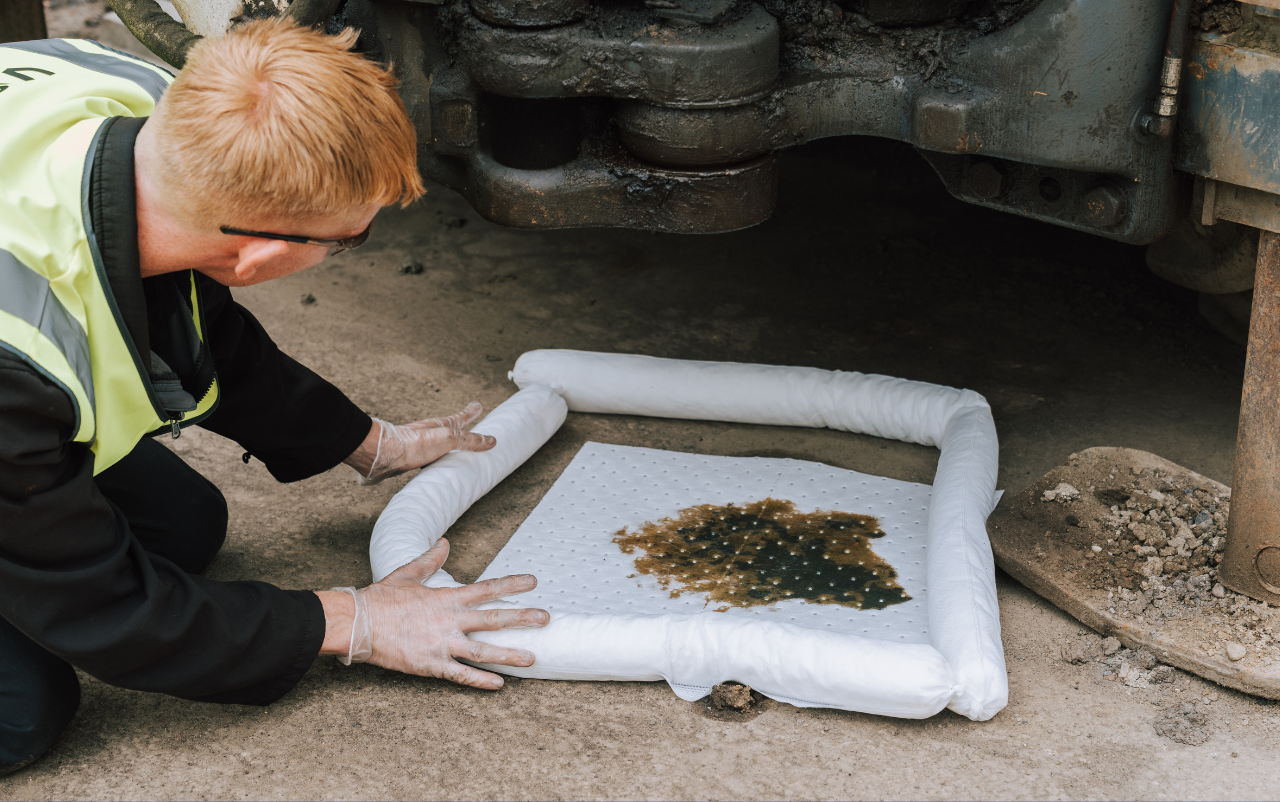
Employees tasked with managing a spill should understand not only how to contain and absorb the liquid, but also how to safely decontaminate affected surfaces and dispose of waste materials in line with local regulations.
Why Spill Management Matters
Poor spill management can result in:
- Slips, trips and employee injuries
- Environmental contamination
- Operational disruption and downtime
- Regulatory action and reputational damage
A structured spill response process ensures employees know what to do, improves response time and reduces risk. It can also support wider environmental management objectives, including alignment with standards such as ISO 14001 where applicable.
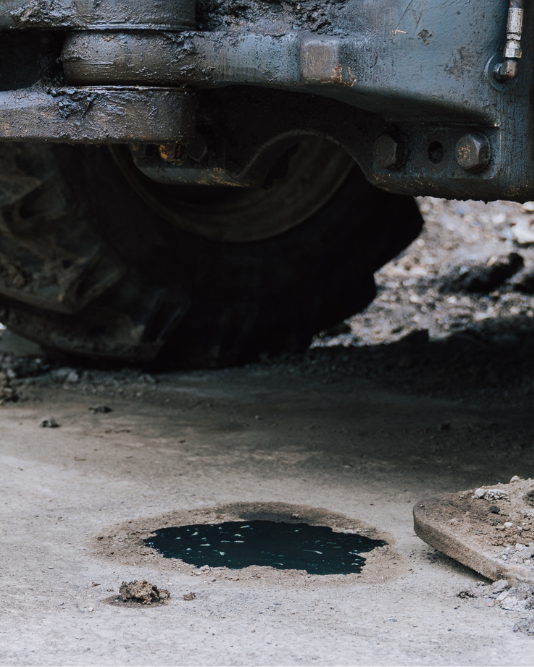
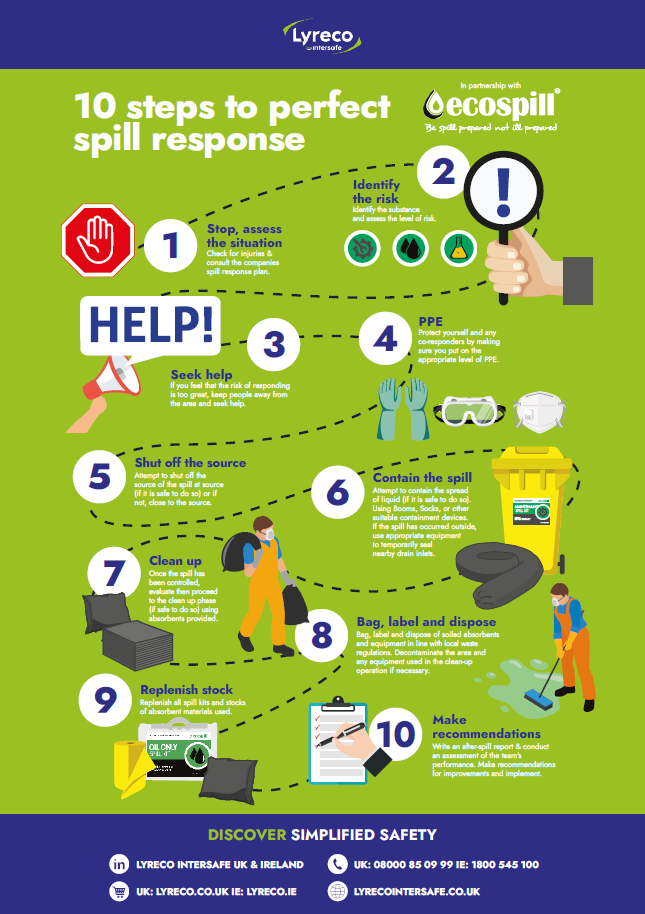
The 10 Steps to Effective Spill Response
Lyreco Intersafe, in partnership with specialist spill control manufacturer Ecospill, supports organisations with practical spill response solutions. The following 10-step framework provides a structured approach to managing workplace spills safely and effectively.
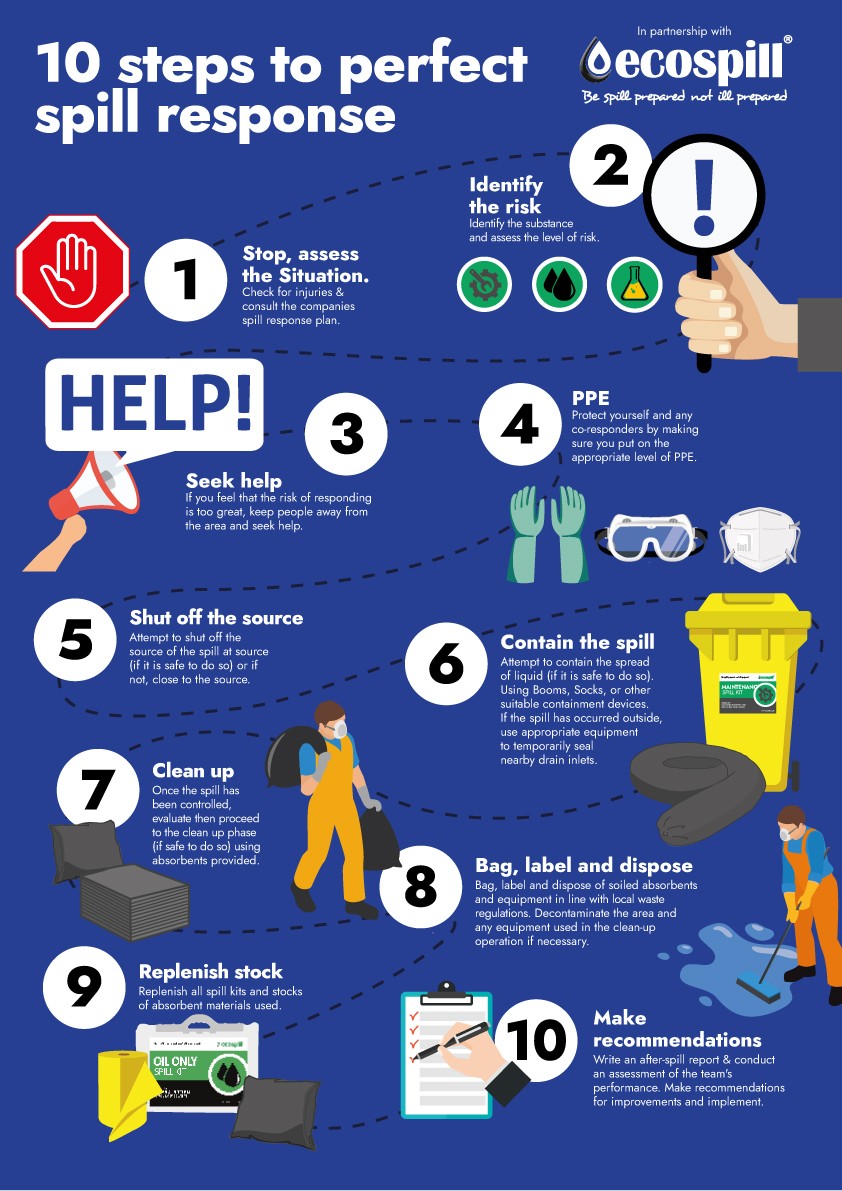
Please find below Ecospill’s 10 steps to perfect spill response.
Step 1: Stop and Assess the Situation
Pause and assess before taking action.
- Check for injuries
- Determine whether it is safe to proceed
- Refer to your organisation’s spill response plan
A calm initial assessment sets the foundation for effective management.
Step 2: Identify the Substance and Risk
Establish what has been spilled and assess the associated hazards.
Different substances (oils, fuels, chemicals or unknown liquids) require different response methods. Correct identification ensures the appropriate absorbents and PPE are used.
Step 3: Seek Support if Required
If the risk is too high, do not attempt to manage the spill alone.
Isolate the area and contact trained responders or emergency services where necessary. Safety must always take priority.
Step 4: Use Appropriate Personal Protective Equipment (PPE)
Before responding, ensure suitable PPE is worn.
This may include:
- Gloves
- Eye protection
- Protective clothing
- Respiratory protection (if required)
PPE selection should be appropriate to the substance involved.
Step 5: Stop the Source
If safe to do so, stop or isolate the source of the spill to prevent further release.
Reducing the volume of liquid escaping significantly limits impact and clean-up time.
Step 6: Contain the Spill
Prevent the spill from spreading.
- Use absorbent socks, booms or barriers
- Protect drains and watercourses with drain covers or seals
- For outdoor spills, prioritise preventing environmental contamination
Early containment is critical in minimising risk.
Step 7: Clean Up Safely
Once contained, recover the liquid using suitable absorbents from your spill kit.
Work methodically and avoid spreading contamination. Select absorbent types appropriate to the liquid involved (e.g., oil-only, maintenance, or chemical).
Step 8: Dispose of Waste Correctly
All contaminated materials must be:
- Bagged securely
- Labelled where required
- Disposed of in accordance with local waste regulations
Decontaminate affected areas and equipment as necessary.
Step 9: Replenish Used Equipment
After any spill incident, restock all used items promptly.
Maintaining fully stocked spill kits and stations ensures readiness for future incidents.
Lyreco can support customers with ongoing supply and replenishment solutions to help maintain site preparedness.
Step 10: Review and Improve
Following the incident:
- Complete an internal report
- Review what occurred
- Identify opportunities for improvement
- Update procedures or training if required
Continuous improvement strengthens overall spill management resilience.
Be Prepared, Not Reactive
Effective spill management combines:
- Suitable spill response equipment
- Clear procedures
- Trained personnel
- Regular review and improvement
Lyreco Intersafe works in partnership with Ecospill, a UK specialising in spill control and environmental protection solutions, to provide businesses with practical, high-quality spill management products and expertise.
If you would like support reviewing your spill preparedness or selecting appropriate spill response solutions, speak to your Lyreco representative for further guidance.
Content created in partnership with EcoSpill.