
Black Friday PPE Deals: Is Saving Money Worth the Risk?
Black Friday is known for offering significant savings on everything from electronics to office supplies. For many businesses, it can also seem like an ideal opportunity to reduce spending on Personal Protective Equipment (PPE).
However, when it comes to products designed to protect workers from harm, the lowest price should never be the deciding factor.
While there are many reputable suppliers offering genuine products online, the growth of online marketplaces has also created opportunities for counterfeit, non-compliant and poor-quality PPE to enter the supply chain. The result? Products that look genuine at first glance but may fail in a real-life incident and ultimately when workers need them most.
Why PPE Is Different
Unlike many workplace purchases, PPE is specifically designed to prevent injury, illness and, in some cases, save lives.
A pair of safety gloves that fails under pressure, respiratory protection that doesn’t filter harmful particles correctly, or a hard hat that doesn’t meet required standards can leave workers exposed to significant risk.
In these situations, the consequences extend far beyond the initial purchase price. A product failure could lead to workplace injuries, operational disruption, reputational damage and, in some circumstances, significant legal and financial consequences if an employer is found not to have provided suitable protection.
The Growing Risk of Online PPE Marketplaces
Online shopping has made PPE more accessible than ever, which means it has also become easier for counterfeit and non-compliant products to reach buyers.
Products are often advertised using genuine brand imagery and descriptions, making it difficult to distinguish legitimate products from unsafe alternatives.
Common warning signs include:
- Prices that appear significantly lower than established market rates
- Missing certification information
- Limited supplier information or traceability
- Poor product descriptions
- Generic packaging
- Unverified marketplace sellers
If a deal appears too good to be true, it is always worth asking why.
Why Independent Testing Matters
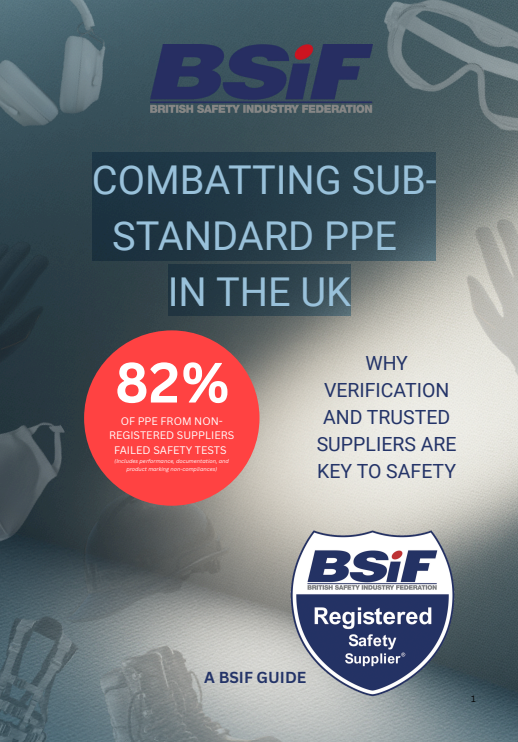
This is one of the reasons organisations such as the British Safety Industry Federation (BSIF) continue to conduct independent testing of products available within the market.
Through the BSIF conducted voluntary market surveillance, products are routinely assessed to verify that they meet the standards they claim to achieve, testing PPE from both Registered Safety Supplier Scheme members and non‑registered suppliers.
Year after year, testing identifies products being sold as PPE that fail to meet the requirements of the relevant standards. In some cases, products have been found to offer significantly less protection than buyers would reasonably expect when tested and have been found to not hold the correct levels of documentation.
The findings serve as an important reminder that appearance alone is not enough. Just because a product carries a safety label does not automatically mean it is compliant.
What Should You Check When PPE Arrives?
Even if you purchase from a supplier you believe to be reputable, it is good practice to inspect products when they arrive.
1. Check the Markings
PPE should include the appropriate certification and identification markings.
Look for:
- CE and/or UKCA markings where applicable
- Relevant EN standard references
- Manufacturer information
- Product codes and batch details
- User instructions where required
Missing or poorly reproduced markings may indicate a problem.
2. Review the Packaging
Counterfeit products often reveal themselves through packaging.
Look out for:
- Poor print quality
- Misspellings
- Inconsistent branding
- Missing documentation
- Damaged or unusual packaging
Compare the product to previous deliveries where possible.
3. Assess the Quality
Does the product feel consistent with previous purchases from recognised brands?
Check for:
- Poor stitching
- Weak materials
- Manufacturing defects
- Inconsistent finishes
- Missing components
Small quality concerns can indicate larger issues with product performance.
4. Check Fit and Comfort
A compliant product still needs to fit correctly to provide the intended protection.
For example:
- Respiratory protection requires appropriate fit testing.
- Safety eyewear should provide adequate coverage without gaps.
- Gloves should fit securely without restricting movement.
If workers immediately identify fit issues, take the time to investigate rather than assuming the product is suitable.
5. Verify Documentation
Reputable manufacturers and suppliers should be able to provide supporting documentation when required.
This may include:
- Declarations of conformity
- Product certificates
- Test reports
- Technical specifications
If documentation cannot be supplied, this should raise questions.
Choosing a Trusted Supplier
The safest approach is to purchase PPE through suppliers with established compliance processes, recognised manufacturer relationships and a proven track record within the industry.
Look for:
- BSIF Registered Safety Suppliers
- Established PPE specialists
- Traceable supply chains
- Access to technical support and compliance documentation
- Recognised manufacturer partnerships
The cost difference between genuine and non-genuine PPE is often small when compared with the potential consequences of product failure.
Yes, black Friday can offer genuine opportunities to save money. But when purchasing PPE, price should never come before protection.
Before making a purchase, take the time to verify the supplier, review the product credentials and question deals that look unusually cheap. It might save money at the start, but it could cost lives in the end.
PPE isn’t just another workplace purchase. It’s the last line of defence between a worker and a potential injury. And that’s never something worth compromising on.