Managing Lithium-ion Battery Fire Risks in Offices
With UK Fire and Rescue services responding to lithium-ion battery fires every five hours, understanding and managing the hidden risk associated with battery-powered devices is increasingly important.*
Modern offices feature a growing number of devices powered by lithium-ion batteries, from laptops and mobile phones to portable chargers and other everyday equipment. While these batteries provide a convenient and efficient source of power, damaged, faulty, or incorrectly used batteries can present a serious fire risk that should be considered as part of workplace fire safety.
The Hidden Risk of Lithium-ion Batteries
Lithium-ion battery fires behave differently from traditional electrical fires due to thermal runaway, an uncontrollable, self-heating state that can cause extreme temperatures and rapid fire spread.
Damage to lithium-ion batteries can cause thermal runaway, which usually follows these steps:
- Rising temperature – when temperatures reach 60°C or more, large amounts of toxic and flammable gases are released, accompanied by a sharp rise in temperature.
- Domino effect – soon after, the gases can cause the battery cell to rupture and ignite. The fire can then rapidly spread across the cells in the battery, causing thermal runaway in otherwise undamaged cells.
- Explosion and spread – the heat, flames, and gases generated during thermal runaway can contribute to secondary fires, allowing the incident to spread to surrounding materials and areas.
In an office environment, these incidents can present a significant risk to people, property, and business operations. These fires require a different response from traditional electrical fires, making it important that battery-powered devices are considered within an organisation’s fire risk assessment and wider fire safety strategy.
How to Manage the Risks of Lithium-ion Batteries in Offices
Managing the risk of lithium-ion battery fires in offices requires an understanding of the devices present within the workplace, appropriate procedures for their use and storage, and clear guidance for employees.
Charge Safely
Safe charging practices can help reduce unnecessary risk. Devices should be charged using compatible equipment supplied or recommended by the manufacturer, and counterfeit or unsuitable chargers should be avoided.
Devices that become hot while charging should be disconnected where it is safe to do so and removed from use until they have been checked. Charging devices overnight or unattended should also be avoided where possible.
Check for signs of damage
Lithium-ion battery devices should be regularly checked for signs of damage. Swelling, excessive heat, leaks, unusual smells, or visible damage to the battery can suggest a potential problem.
Damaged or faulty devices should be withdrawn from use and managed in accordance with appropriate procedures. Batteries should be disposed of through appropriate recycling or waste channels.
Store batteries appropriately
Lithium-ion batteries should be stored in suitable locations away from excessive heat and combustible materials. Where larger quantities of batteries or devices are used or stored, designated storage areas and appropriate procedures can help ensure the associated risks are considered and managed when devices are not in use.
Be prepared for an incident
Training plays an important role in managing lithium-ion battery risks. Employees should understand how to identify potentially damaged devices, follow safe charging and storage practices, and know what action to take if an incident occurs.
Preparedness should also form part of the workplace fire risk assessment. This includes considering the types of battery-powered devices present, appropriate fire protection measures, evacuation procedures, and ensuring employees understand how to respond safely in an emergency.
Understanding Class L
Published in January 2026, BS ISO 3941:2026 introduced Class L, a dedicated fire classification for lithium-ion cells and batteries. The revised standard formally distinguishes lithium-ion battery fires from traditional fire classes, recognising their distinct behaviour and the different approach required to manage the associated risks.
The risk didn’t change; the recognition did.
being Fire Safety ready with LFX Fire Extinguishers
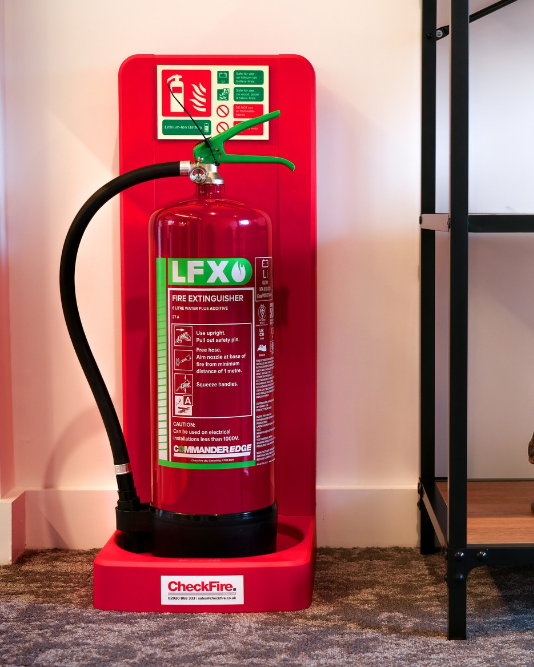
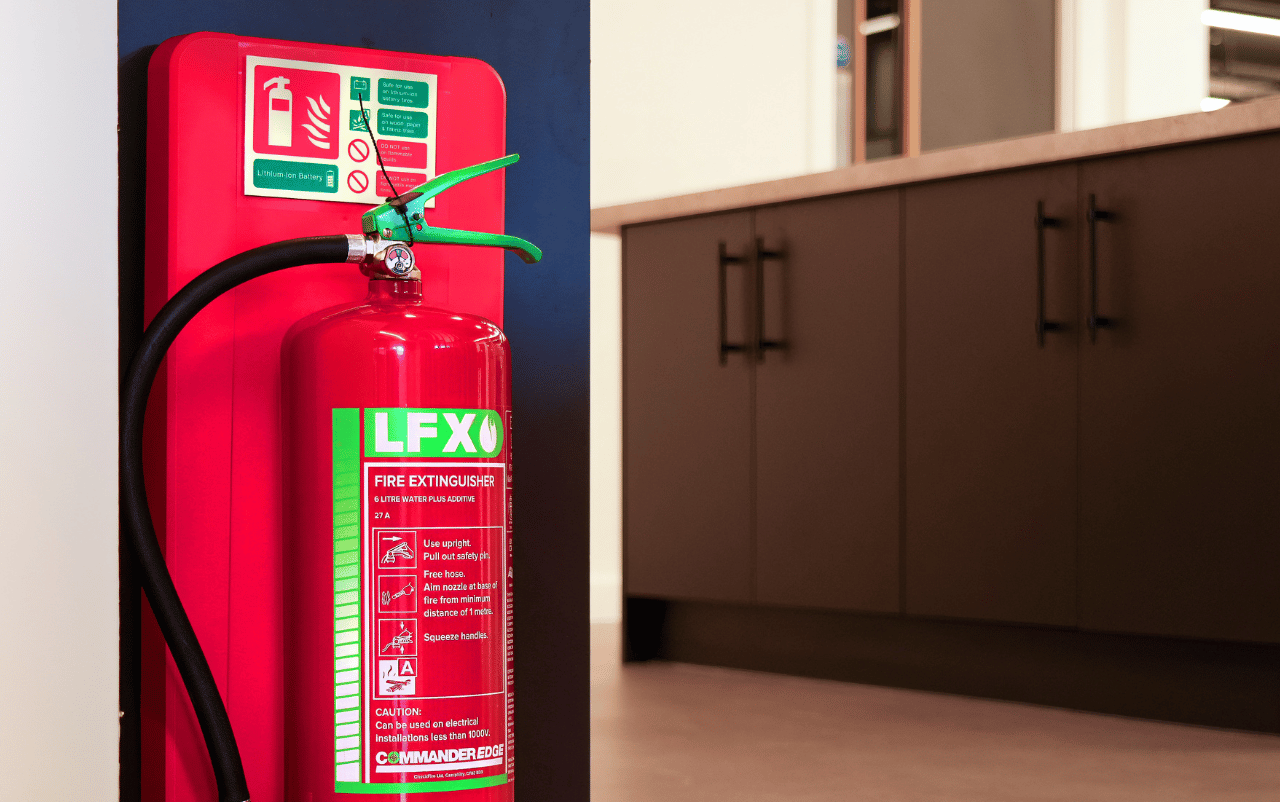
As part of a wider fire safety strategy, LFX fire extinguishers are designed specifically for lithium-ion battery fires. Using a water-based agent that discharges as an endothermic foam, LFX absorbs heat to cool the battery and break down the chain reaction in thermal runaway, while also tackling secondary Class A fires caused by the battery fire.
*Source: UK brigades tackling lithium-ion battery fire every five hours – QBE European Operations
Content created in partnership with CheckFire.