What is Arc Flash? Understanding the Risk
An arc flash is one of the most serious hazards in any environment where people work with, or near, live electrical equipment.
It occurs when electrical current travels through the air between conductors, or from a conductor to the ground. In an instant, this creates an intense release of energy in the form of extreme heat, light, pressure and sound.
The consequences can be devastating. An arc flash can produce temperatures hotter than the surface of the sun, vaporise metal, ignite clothing and create a pressure wave powerful enough to throw workers from their feet. Those exposed may suffer severe burns, hearing damage, eye injuries or permanent blindness. In the most serious cases, an arc flash can be fatal.
While the event itself happens in milliseconds, the impact can be life-changing.
Who is at risk?
Arc flash is often associated with high-voltage electrical work, but the risk is not limited to one sector or voltage level. It can occur wherever there is live electrical equipment and the potential for an electrical fault.
Those at risk can include electrical engineers, maintenance teams and contractors working in or around switchgear, control panels, transformers, substations and distribution equipment. But the risk can also extend to workers in close proximity to electrical systems, including those working in manufacturing, utilities, construction, rail, renewable energy, data centres and battery production.
Common causes include equipment failure, loose connections, deteriorating insulation, dust or moisture, accidental contact with energised components and incorrect maintenance practices. Something as simple as a dropped tool or unintended contact with live equipment can create the conditions for an arc flash.
This is why arc-flash risk must be considered as part of a wider electrical safety strategy, rather than treated as a concern only for specialist electrical teams.
More than a burn risk
The extreme heat generated by an arc flash is often the most recognised danger, but it is not the only one.
The thermal energy can cause serious burns, even where clothing does not ignite. The intense light may damage eyesight, while the sound blast can cause hearing loss. In more severe incidents, the rapid expansion of superheated air can create an arc blast, projecting molten metal, debris and equipment parts at high speed.
For businesses, the effects go beyond the immediate injury. Arc-flash incidents can lead to equipment damage, operational downtime, investigations and long-term consequences for the people involved.
Preventing an incident must always be the priority. This means following safe systems of work, isolating equipment wherever possible, maintaining electrical systems and ensuring workers have the right training and competence for the task.
Why specialist arc-rated clothing matters
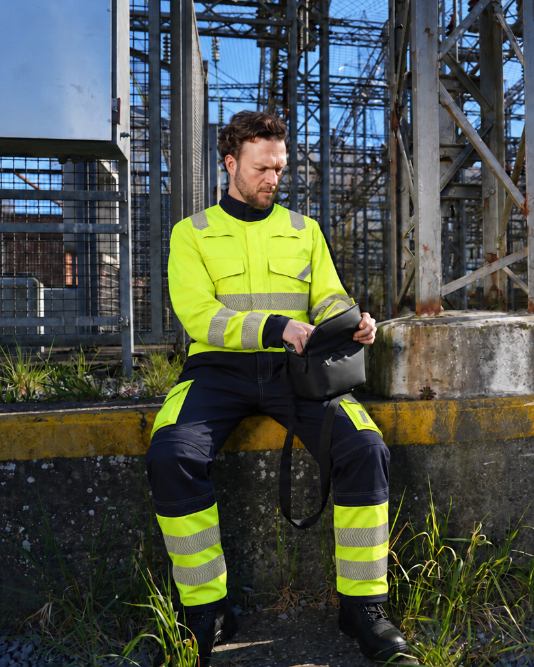
Personal protective equipment is the last line of defence, not a replacement for safe working practices or engineering controls. However, where a residual arc-flash risk remains, specialist arc-rated clothing is essential.
Standard workwear, or flame-resistant clothing that has not been designed and tested for arc-flash exposure, may not provide the necessary protection. In particular, garments made from meltable materials such as polyester can melt onto the skin when exposed to extreme heat, increasing the severity of an injury.
Arc-rated clothing is designed to provide thermal protection during an arc-flash event. It is tested to recognised standards and rated according to the level of incident energy it can withstand. The right level of protection must be selected following a suitable risk assessment, taking account of the specific task, equipment and working environment.
The clothing system matters too. Protective garments should be worn correctly, with closures fastened and suitable arc-rated layers worn together where required. Damaged, modified or incorrectly maintained garments may not deliver the protection expected of them.
Protection only works when it is worn
A garment’s technical rating is important, but it only provides protection when it is worn correctly and consistently.
That is why comfort, fit and freedom of movement should be considered alongside protective performance. Clothing that is too heavy, restrictive or poorly fitting is more likely to be altered, worn incorrectly or avoided altogether. In electrical environments, that can undermine an otherwise well-designed PPE programme.
The most effective approach combines risk assessment, safe systems of work, training and properly specified protective clothing. When workers understand the hazard, know how their clothing protects them and have garments they can wear comfortably throughout the day, organisations are in a far stronger position to reduce risk.
Arc flash may be a complex electrical hazard, but the principle is straightforward: understand the risk, control it wherever possible and ensure that anyone exposed to residual risk has the right protection in place.
Further guidance on arc flash safety
Understanding the risk is only the first step. Employers and those responsible for PPE selection need to consider how arc flash can occur, what affects the level of protection required and how protective clothing should be worn, cared for and maintained.
Alsico’s Guide to Arc Flash provides a more detailed introduction to arc-flash hazards, terminology, PPE selection, garment testing and best practice for implementation.
References
Alsico Website | Electricity and Arc Flash Protection – Information on alsico’s approach to protective workwear for electrical environments, including arc-rated clothing designed to support protection, comfort and freedom of movement.
Alsico Guide to Arc Flash – An introduction to arc-flash hazards, including how arc flashes occur, who may be at risk, the importance of risk assessment and the role of specialist arc-rated PPE.
Alsico A Safer Future: Closing the PPE Knowledge Gap Report – Research exploring PPE knowledge, comfort and compliance in electrical environments, including the importance of correct garment selection, wear and care.
Putting arc-flash protection into practice
Arc-rated clothing must be selected as part of a thorough risk assessment, taking account of the task, working environment and potential level of incident energy. No single garment or protection level will be appropriate for every arc-flash hazard.
These garments should always be selected according to the findings of the wearer’s risk assessment and the relevant protection requirements for the task.
Content created in partnership with Alsico.