How to Create Safer Workplaces During Summer Shutdown
Summer shutdown is an important period in the operational calendar for many manufacturers. Production lines stop, contractors arrive on site, machinery is opened for inspection, and work begins on repairs, upgrades, cleaning, and facility improvements before operations restart.
While summer shutdowns create the ideal opportunity to improve equipment and refresh workplaces, they also introduce significant safety risks.
Imagine a machine accidentally gets turned on while an engineer is working on it. Imagine a worker using a broken ladder without knowing it has a loose rung. These are both examples of real incidents that can happen in the workplace, and they’re especially more likely to happen during summer shutdown.
Why are accidents more likely to happen during summer shutdown?
Almost 50% of all work-related accidents in manufacturing plants occur during plant maintenance outages. (TA Cook and Solomon Associates 2019).
This can be due to many reasons, but some common causes include:
- More maintenance work being carried out (incomplete isolations)
- New contractors who are unfamiliar with procedures
- Temporary access routes and restricted areas
- Increased working at height activities
- Slippery floors from cleaning
- Heat-related injuries
How can companies ensure safety during summer shutdown?
Planning and procedures
Safety begins long before maintenance work starts. Facilities should fully plan maintenance schedules, contractor responsibilities, isolation procedures, permit systems, and emergency arrangements to reduce confusion once production stops.
Clear Lockout Tagout Tryout (LOTOTO) procedures help ensure that employees and contractors follow the same safe isolation process every time maintenance is carried out. Without documented procedures, there is a greater risk of confusion and inconsistent practices. Standardised LOTOTO procedures also support training and help businesses demonstrate a stronger commitment to workplace safety and compliance.
Communication
Regular briefings, shift handovers, and clear visual communication help ensure everyone understands active hazards, restricted areas, and equipment status throughout the shutdown period. Communication extends to the site signage. It’s important to ensure that signage is regularly updated and replaced when worn or damaged.
Restart safety
Restarting operations can introduce serious risks if equipment has not been properly checked following maintenance. Before production resumes, facilities should complete final inspections, verify completed work, remove Lockout Tagout devices correctly, and ensure all personnel are clear of restricted areas before machinery is re-energised.
What products are effective at keeping staff safe during summer shutdown?
Lockout Tagout
During summer shutdown, maintenance work takes place more frequently than at any other time of year. Imagine an engineer is working on a machine and someone accidentally re-energises it during maintenance. It can easily happen, and measures such as Lockout Tagout must be in place at all times to ensure worker safety.
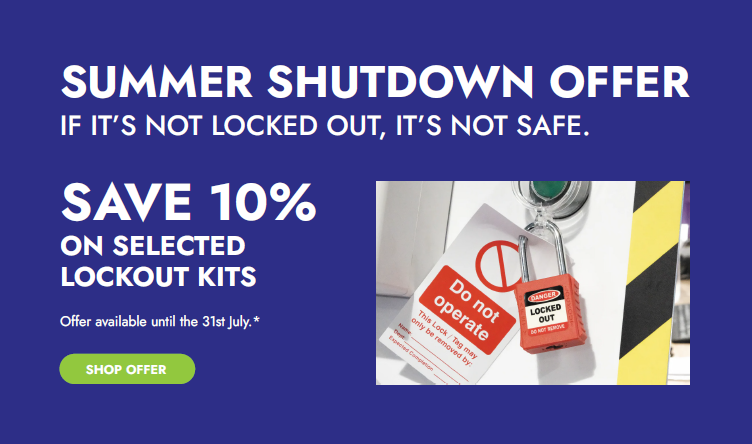
Padlocks: Padlocks are the cornerstone of any Lockout Tagout Tryout procedure. They are applied to lockout devices to prevent hazardous energy sources from being energised. When selecting padlocks, you can choose from multiple colours so that every team or department has its own colour. This way, you know who has locked out which machine.
Hasps: During maintenance, multiple people may need to apply a lockout padlock. However, many lockout devices have only a couple of holes for a padlock. This is when you need a hasp. Hasps are applied to the lockout device and allow for multiple people to apply their padlocks at the same time, which is ideal for maintenance projects that require larger teams. It ensures that everyone can apply a padlock and prevents re-energisation before work has finished.
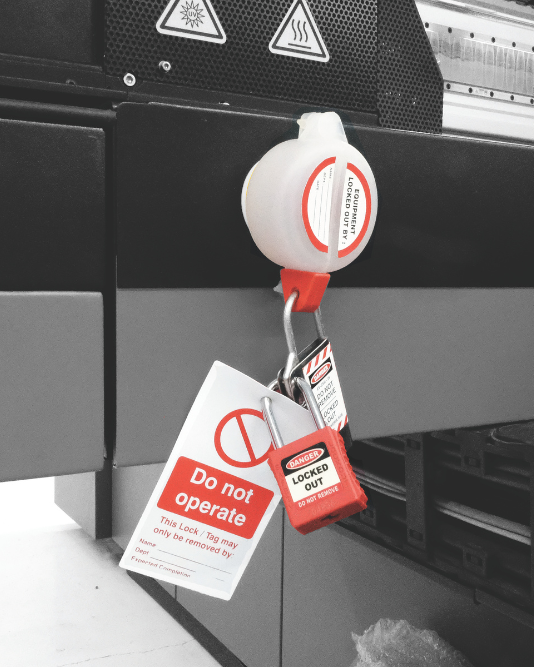
Tags: When applying a lock, it’s always important to add a tag to identify the worker who has locked out the device. These tags are highly visible warning tags that aid the safe running and maintenance of machinery on site.
Lockout Kits: Pre-selected lockout kits are designed to cover the most common needs. They are ideal for keeping essential lockout equipment in one convenient place, without the need to return to a lockout station before moving to the next machine. Lockout kits generally come with a carry case, which makes them the ideal solution for workers on the move who need to carry lockout equipment to multiple stations.
Pouches: Lockout pouch kits are ideal for engineers and contractors implementing Lockout Tagout procedures across the facility. These small kits are the perfect option for workers who are constantly on the move and working on different machines, as they can fit all essential lockout items in a single pouch. It saves people from carrying around a full box of lockout equipment and fits perfectly on a belt or in a toolbox.
Ladder Lockout
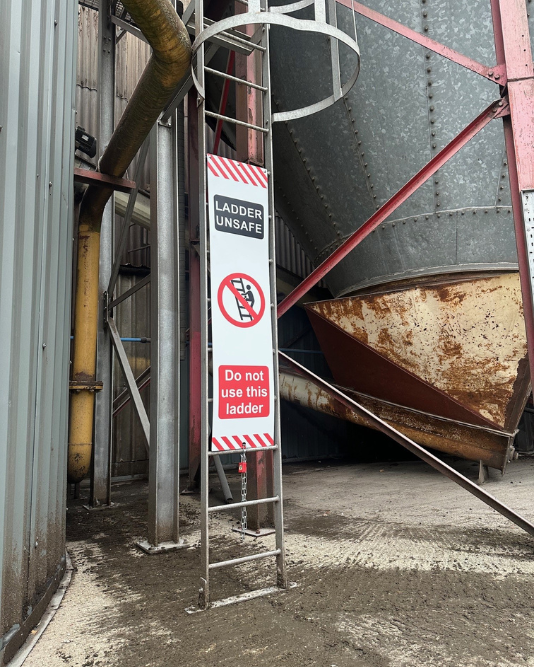
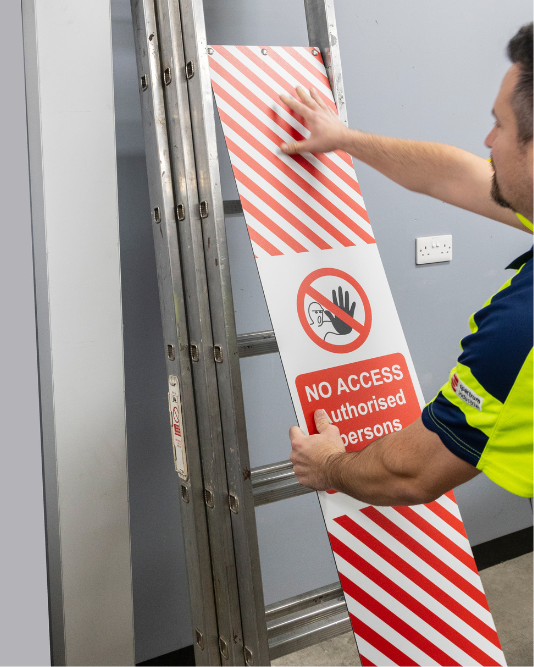
Using a ladder lockout is ideal when companies need to restrict access to dangerous or confidential areas or prevent the use of unsafe ladders.
If a ladder has a broken rung or is unstable, it’s important to use a ladder lockout. For example, if you put a sign on the ladder, people may ignore it and still climb it by moving the sign. However, a ladder lockout is hard to miss and can physically prevent people from climbing the ladder, preventing a potential accident.
Signage
Temporary Signage
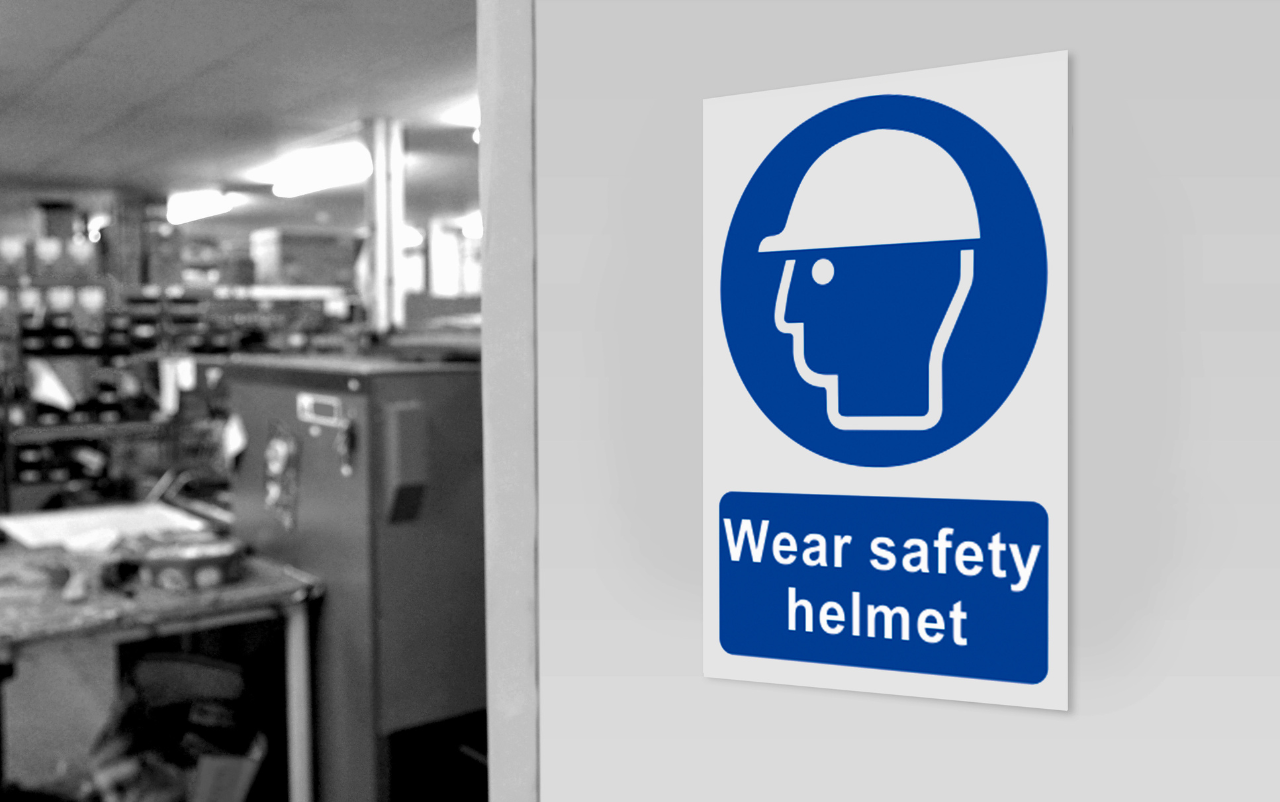
Summer shutdown periods often require temporary signage to communicate important messages to workers. This can be for temporary layout changes, temporary trip hazards, or temporary working at height signage. These are important so all staff, contractors and visitors understand what they need to be aware of in the workplace.
Replacement Signage
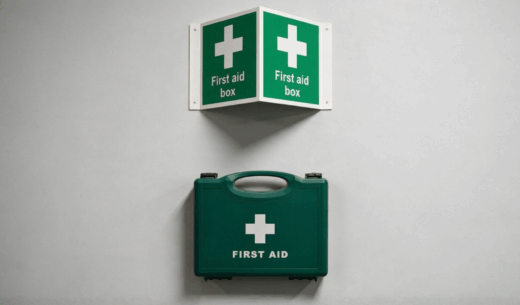
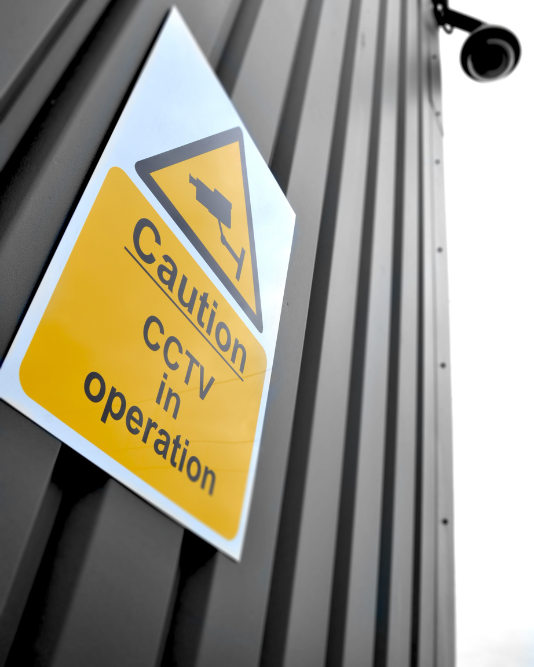
While carrying out maintenance work, it is the ideal time to ensure existing signage is legible and up to date. Companies should do this regularly throughout the year, but summer shutdown is an ideal time to conduct a thorough check of all existing permanent signs to ensure they are in good condition, readable, and up to date with the latest symbols.
Floor Markings
Shutdowns are also a great opportunity to replace worn floor markings or add new markings to improve safety. Floor markings are typically important for:
- Reminding workers about relevant PPE
- Identifying pedestrian routes
- Warning about forklifts
- Warning about slips and trips
- Declaring prohibited actions such as smoking, entering, and operating forklifts
Tagging Systems
Working at height can be dangerous, especially if precautions are not taken. Tagging systems help ensure that scaffolding, ladders and MEWPs are regularly inspected.
This is important for companies during summer shutdown, as they may need staff to work at height to access cables or machines that cannot be reached from ground level. Ensuring equipment is safe to use is crucial, as a broken ladder or a faulty MEWP can cause serious harm or a fatality.
Tagging systems help keep workers safe by recording a schedule of regular inspections and These products are important for worker safety year-round, but especially during summer shutdown. However, proper processes and procedures are just as crucial for ensuring workplace safety. Companies that plan isolations properly, improve visual communication, and invest in effective Lockout Tagout systems are better positioned to complete maintenance safely. Those who cut corners and prioritise efficiency over safety are the ones who will suffer injuries and accidents.
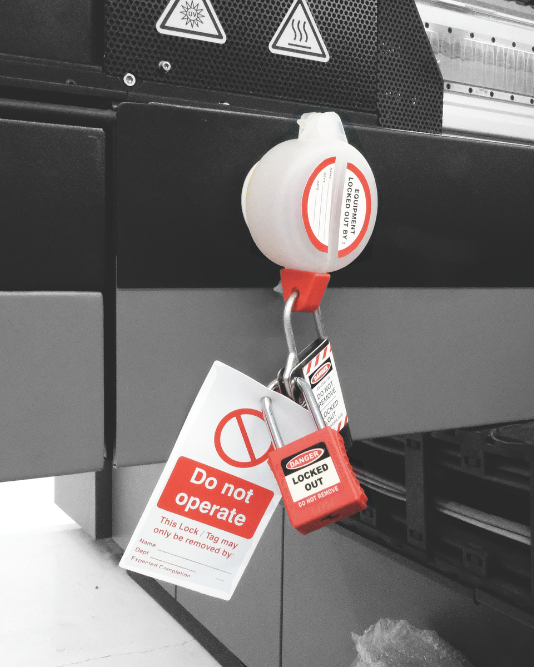
When companies have plans, processes, and procedures in place alongside effective Lockout Tagout, signage, and tagging systems, they are much more likely to create a safer workplace. A workplace where everyone knows their job and how to perform it safely.
Content created in partnership with Spectrum Industrial.